Pattern: Mission-Reflective Design
Mission-Reflective Design Pattern Definition: An approach where the structure, behavior, or visual system of an interface reflects how the organization’s work actually happens.
What This Pattern Does
Uses design to express the nature of the work
Reinforces meaning through structure and interaction
Makes abstract or complex work more tangible
Aligns the digital experience with the organization’s core activity
Reduces reliance on explanation alone
What This Looks Like
From Process to Interaction (Habitat for Humanity)
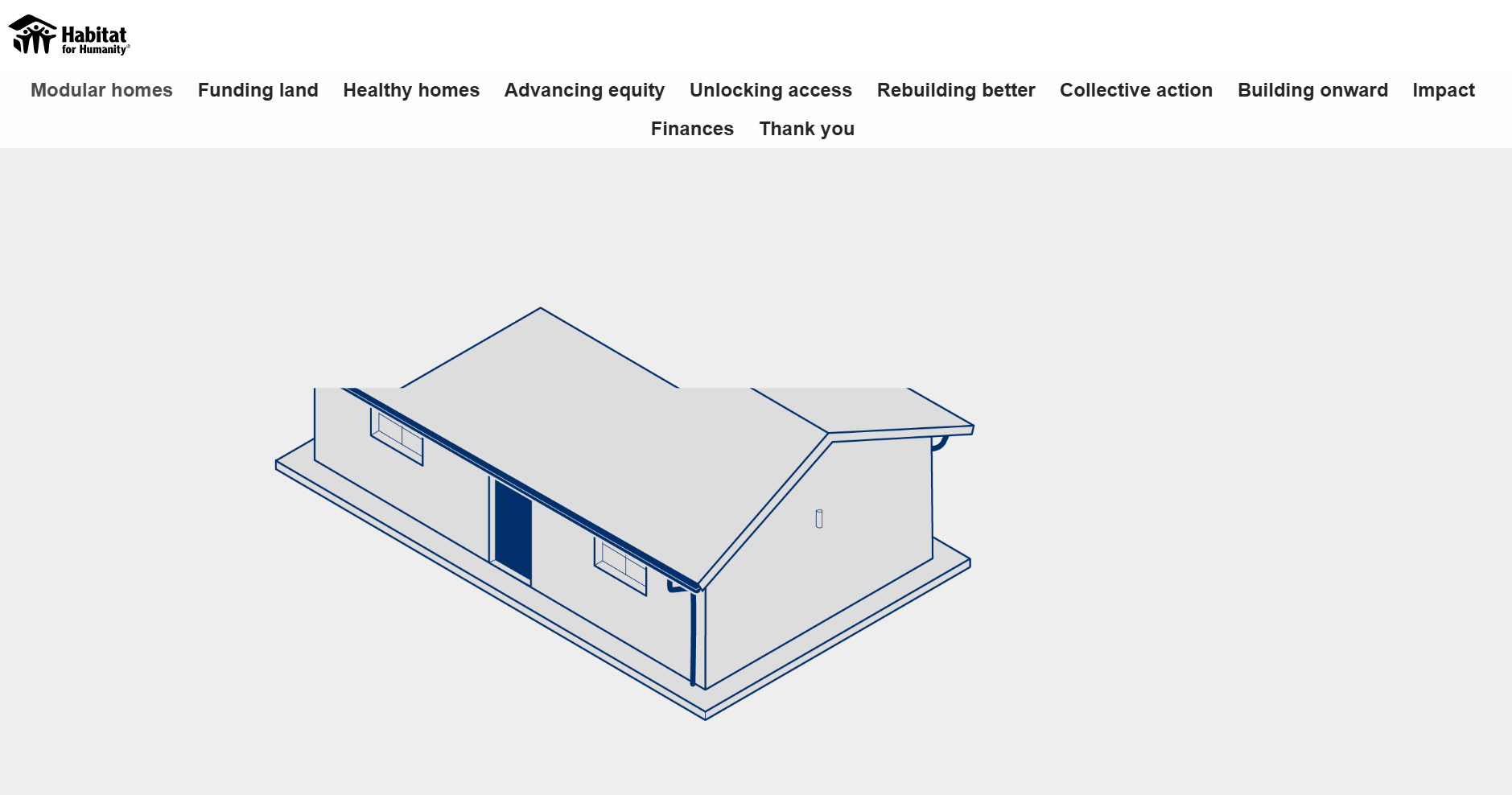
A scroll-driven annual report (2025) reveals the stages of building a home step by step, mirroring the organization’s participatory construction model.
From Environment to Visual System (Enterprise)
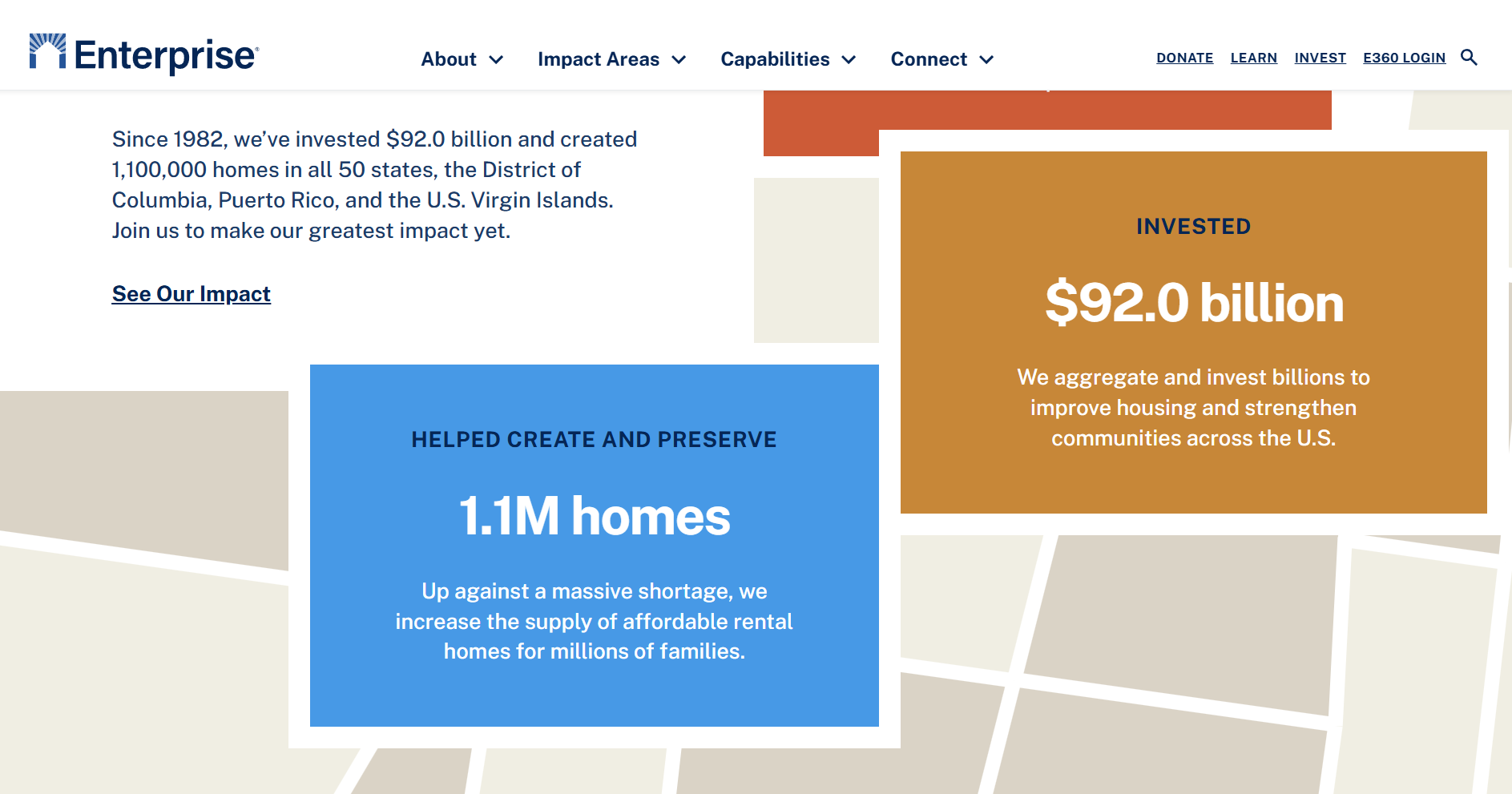
Geometric patterns echo neighborhood grids and housing structures, reflecting the physical environments the organization helps create.
Why Organizations Use It
Some types of work are difficult to explain through text alone.
Organizations use this pattern to make the work more understandable by reflecting it through the interface itself. Instead of describing how something works, the digital design helps users experience its structure, process, or environment.
Application: Questions to Consider
What does your work actually look like when it happens?
Is it sequential, distributed, physical, or relational?
Can that structure be reflected in how your digital interface behaves or is designed?
Where might design reinforce meaning instead of decorating it?
Does your current design help people understand the work, or just present it?