How Habitat for Humanity Uses Humor Without Undermining the Mission

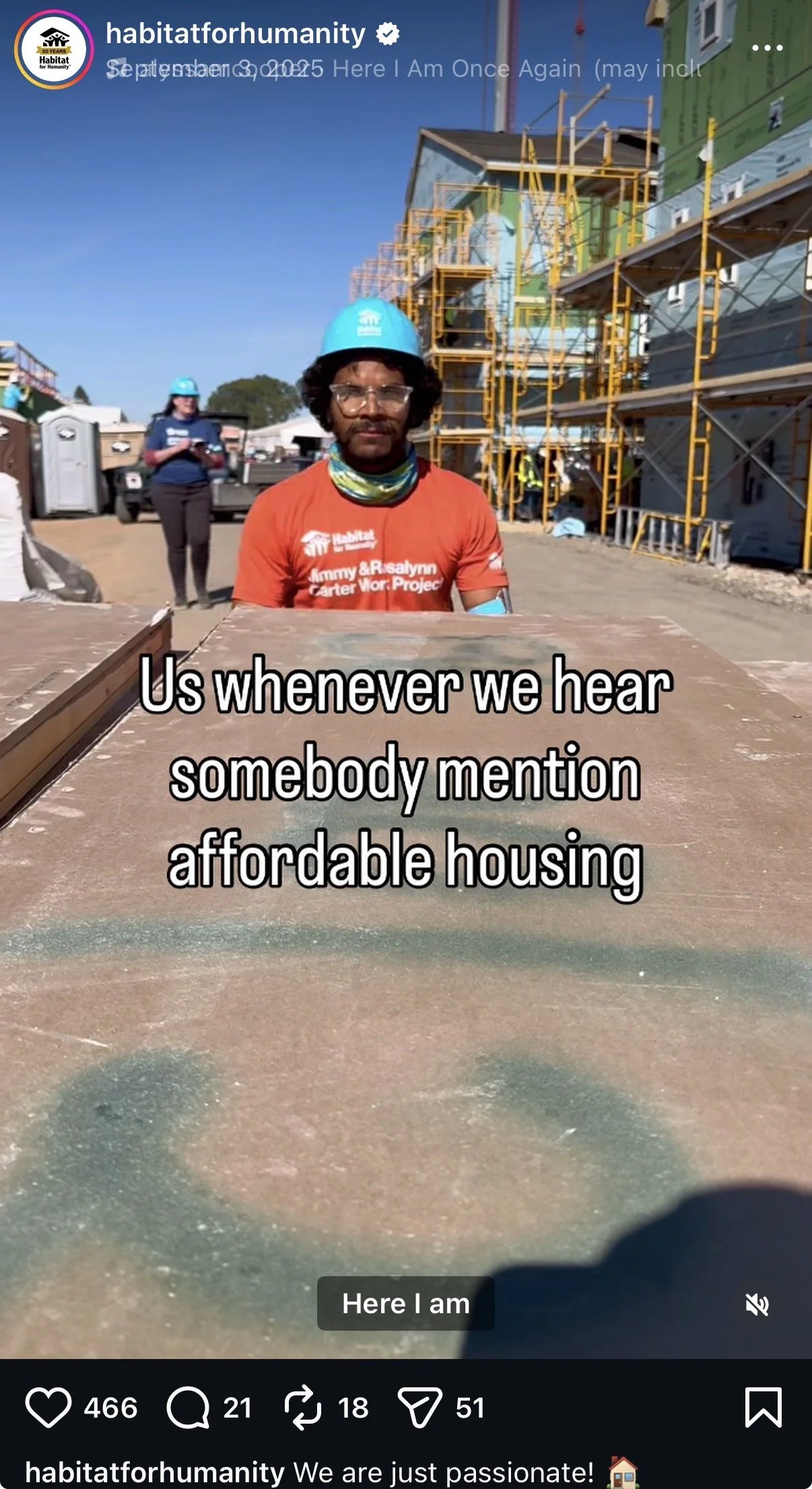
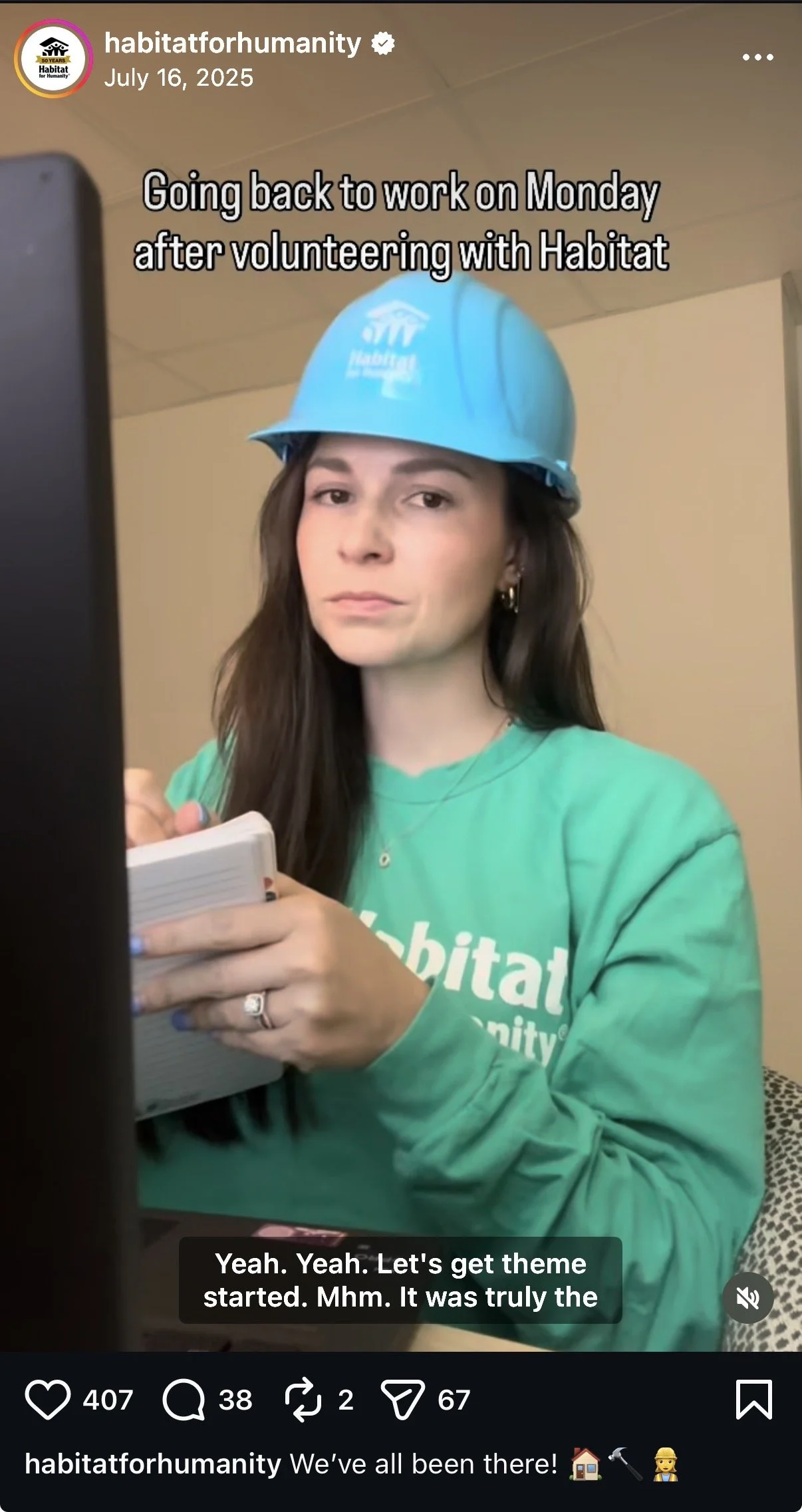
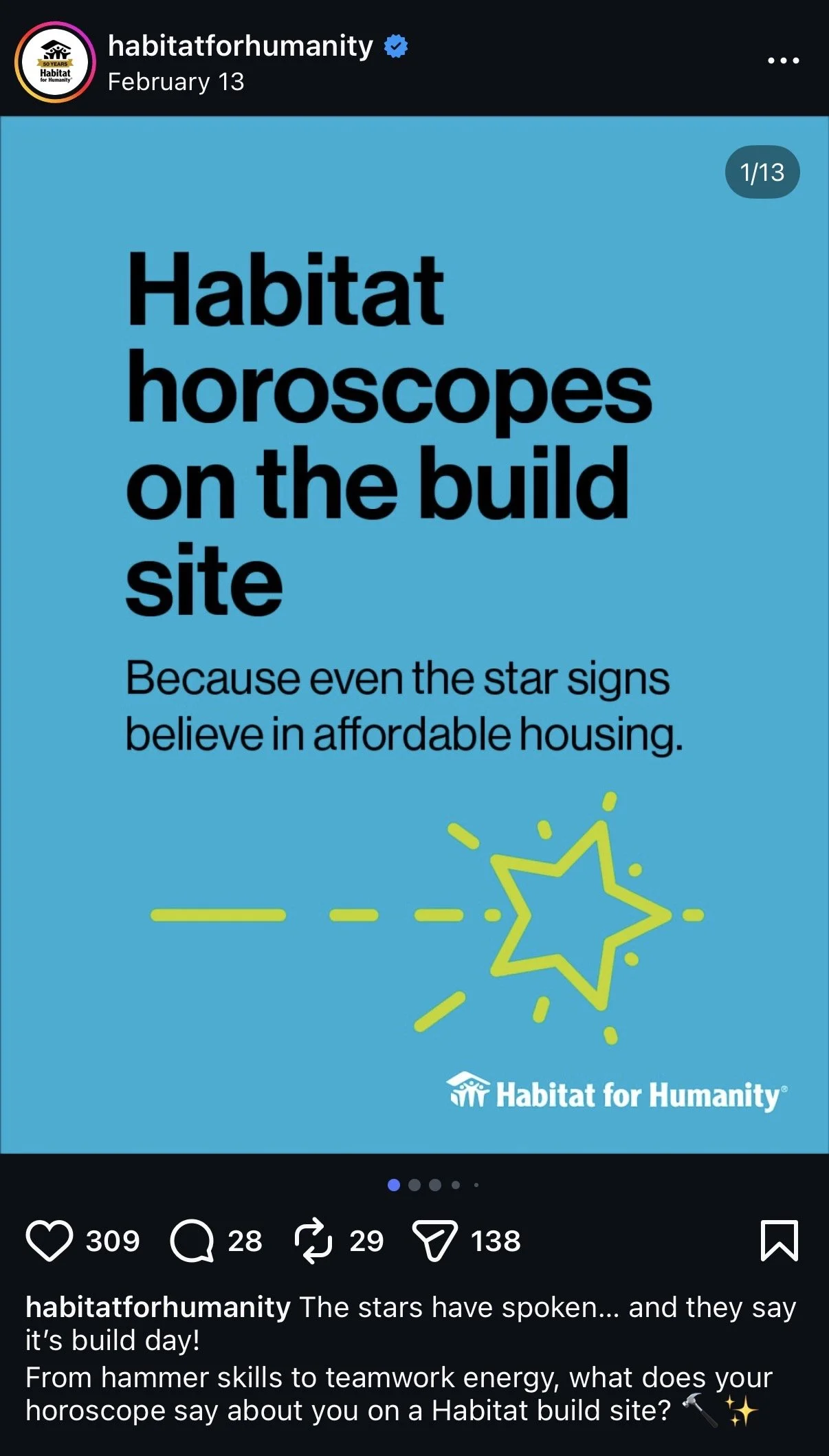
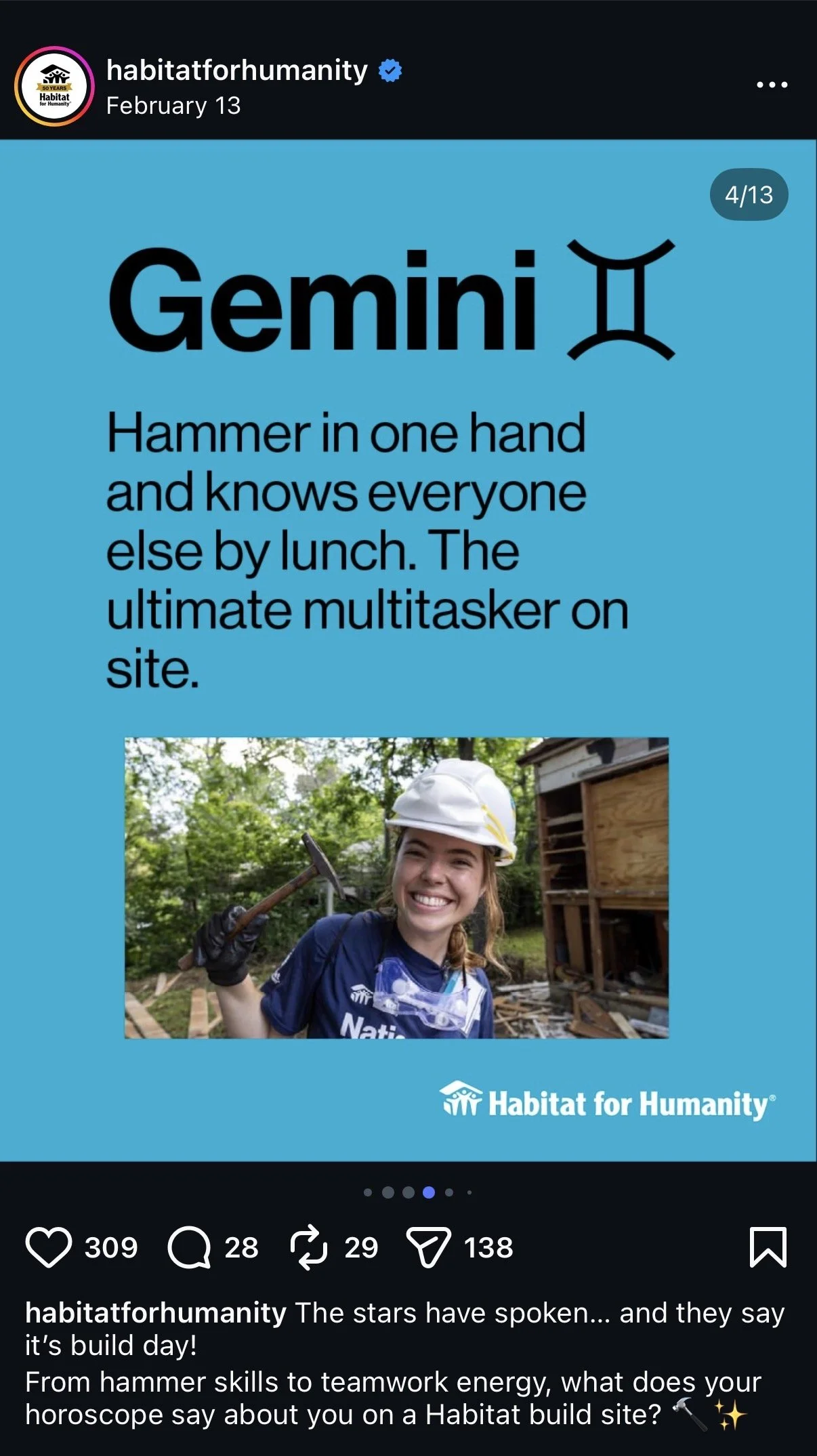
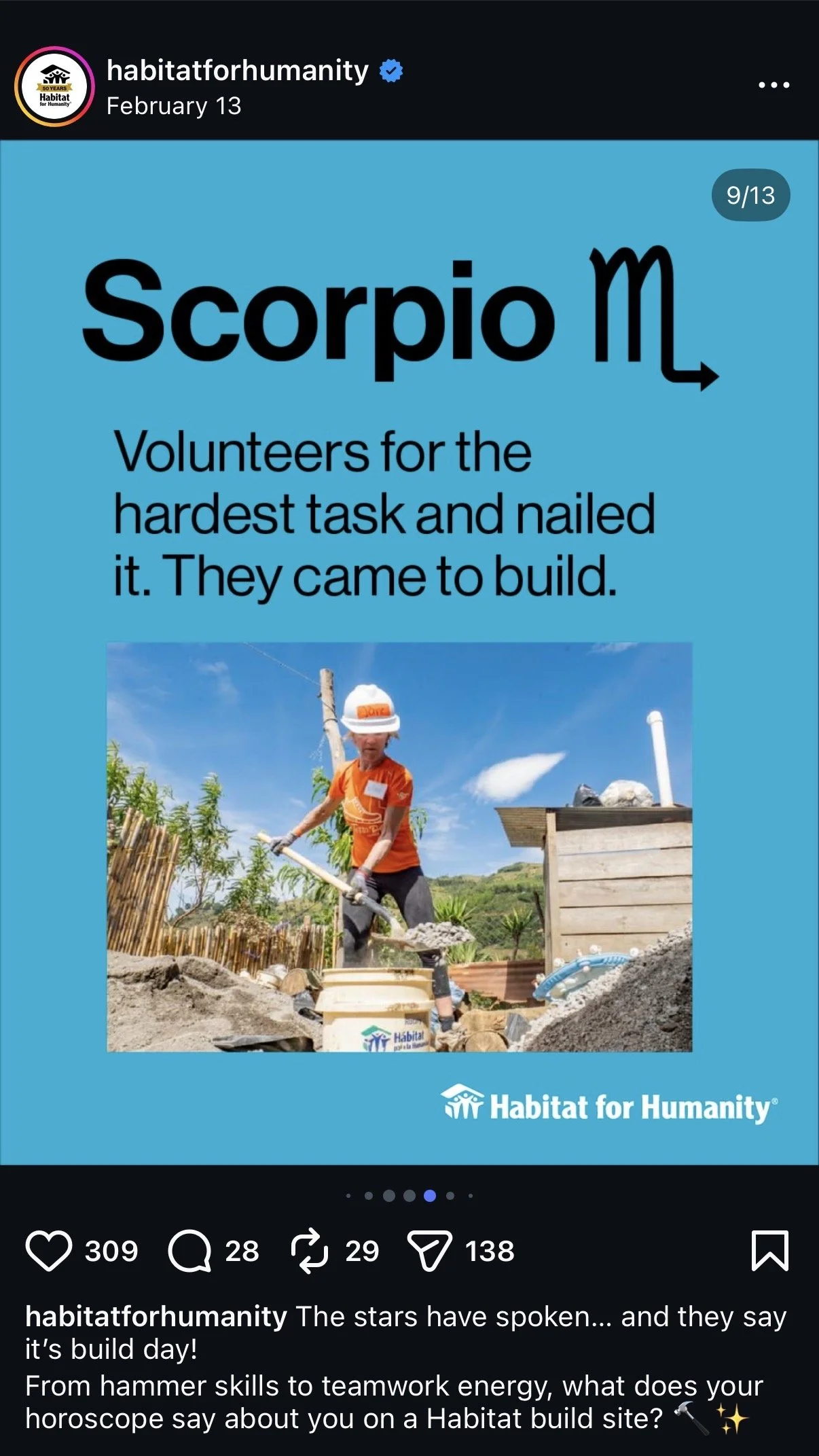
How Habitat for Humanity uses Humor, IG Post Examples Pulled From May 2025-April 2026, observed April 2026
Habitat for Humanity’s IG Posts from May 2025-April 2026, observed April 2026
Interface: Instagram | @habitatforhumanity
Lens: Create Belonging
Pattern: Humor Adjacent to Mission
Key Signal
Habitat for Humanity uses humor not as a break from the mission, but as a delivery mechanism for it. The numbers support it.
Why It Matters
Most nonprofits treat brand voice as a liability to manage. Habitat treats it as an asset to deploy.
Observation
Scattered across a year of near-daily posts on @habitatforhumanity are posts that don’t look like nonprofit content at all. Analyzing more than 150 posts between May 2025 and April 2026, a pattern emerges that’s consistent enough to be intentional: Habitat is funny. And their funniest posts are consistently their most engaging owned content.
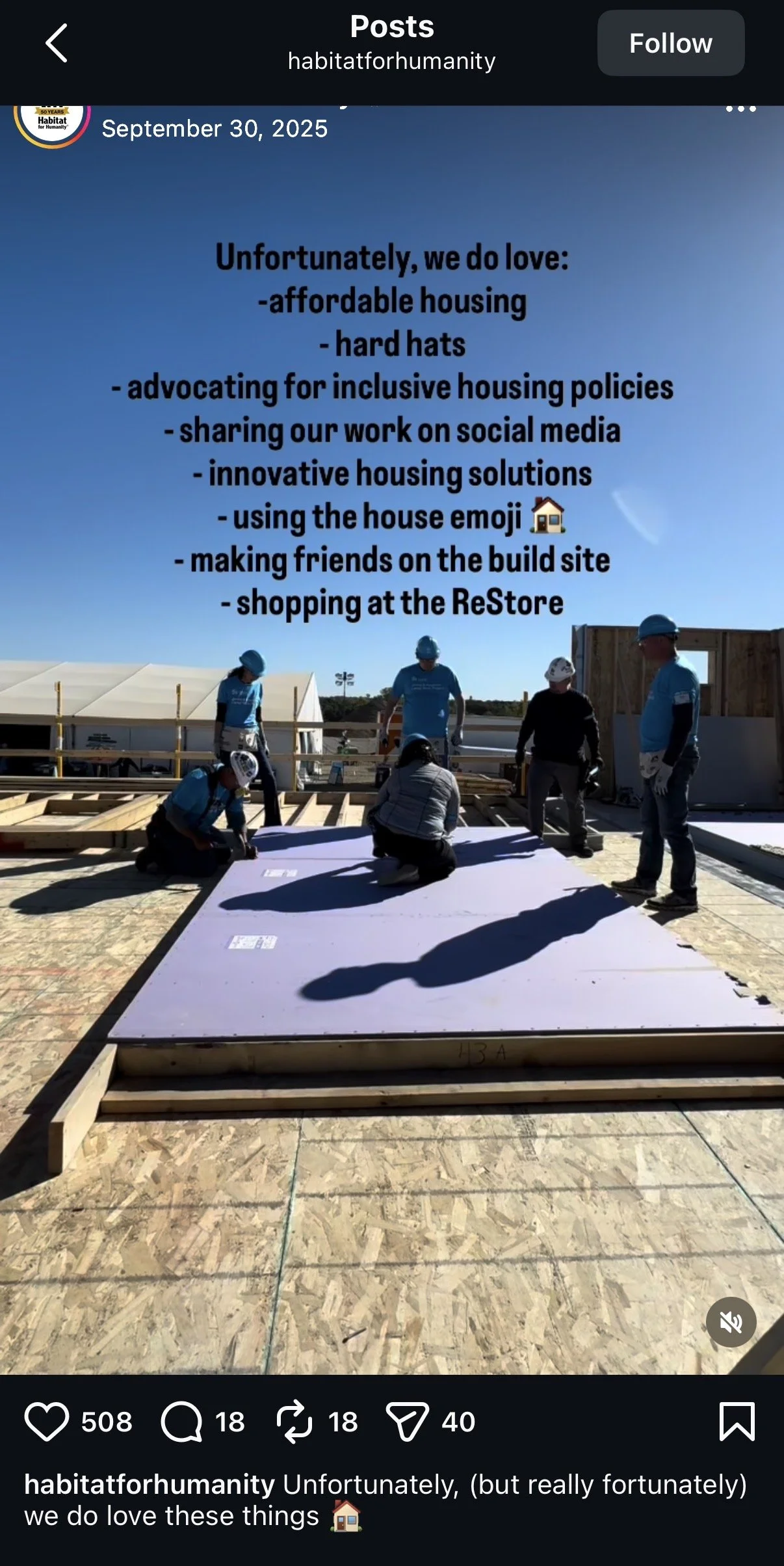
A horoscope series predicting what your star sign says about your relationship to homeownership. A Reel leaning into the “orange era,” a playful, self-aware nod to their brand color. A meme format so relatable it could have come from a lifestyle account. An aspect ratio joke that only makes sense if you spend too much time thinking about Instagram grids.
These posts consistently earn 400 to 500+ likes. That’s 2 to 3x the performance of standard mission content on the same account.
The pattern is consistent enough that it stops being coincidence and starts being choice.
What makes it work is what Habitat isn’t doing. They aren’t making jokes about housing insecurity. They aren’t softening the mission to get laughs. The humor operates adjacent to the work. It targets the experience of being a Habitat supporter, the culture of the organization, the texture of the brand. The subject of the joke is never the people they serve.
That boundary is what makes the voice sustainable. Crossing it is what causes nonprofit humor to go wrong.
Why It Matters
Many nonprofits approach social media as an extension of their responsibility to inform and help. The content stays close to the mission, the tone stays careful, and the priority is typically clarity over personality. That approach makes sense as the work is serious, the stakes are real, and the risk of being misunderstood or criticized feels high. But the result is often content that is easy to scroll past.
What stands out here is not simply that Habitat is using humor. It’s how they are using it. The humor does not replace the mission. It creates an entry point into it. A follower who may not stop for a program update or a statistic will stop for something that feels familiar, playful, or self-aware. That moment of attention isn’t the end goal, it’s the opening. And once that attention is earned, the organization has more permission to introduce the work, the need, and the ways to engage. They build connection before the ask.
This also shifts how brand voice is understood internally. Instead of being something to manage or limit, it becomes a tool that can expand reach, build affinity, and make the mission more visible to people who were not actively looking for it.
For organizations trying to grow their audience or re-engage a passive one, this matters. Instead of asking whether humor belongs in nonprofit communication, or simply shutting it down, see if there’s a way to use it that strengthens, rather than dilutes, how the work is understood.
Why This Works
Humor targets supporter experience, not the mission itself. The boundary holds
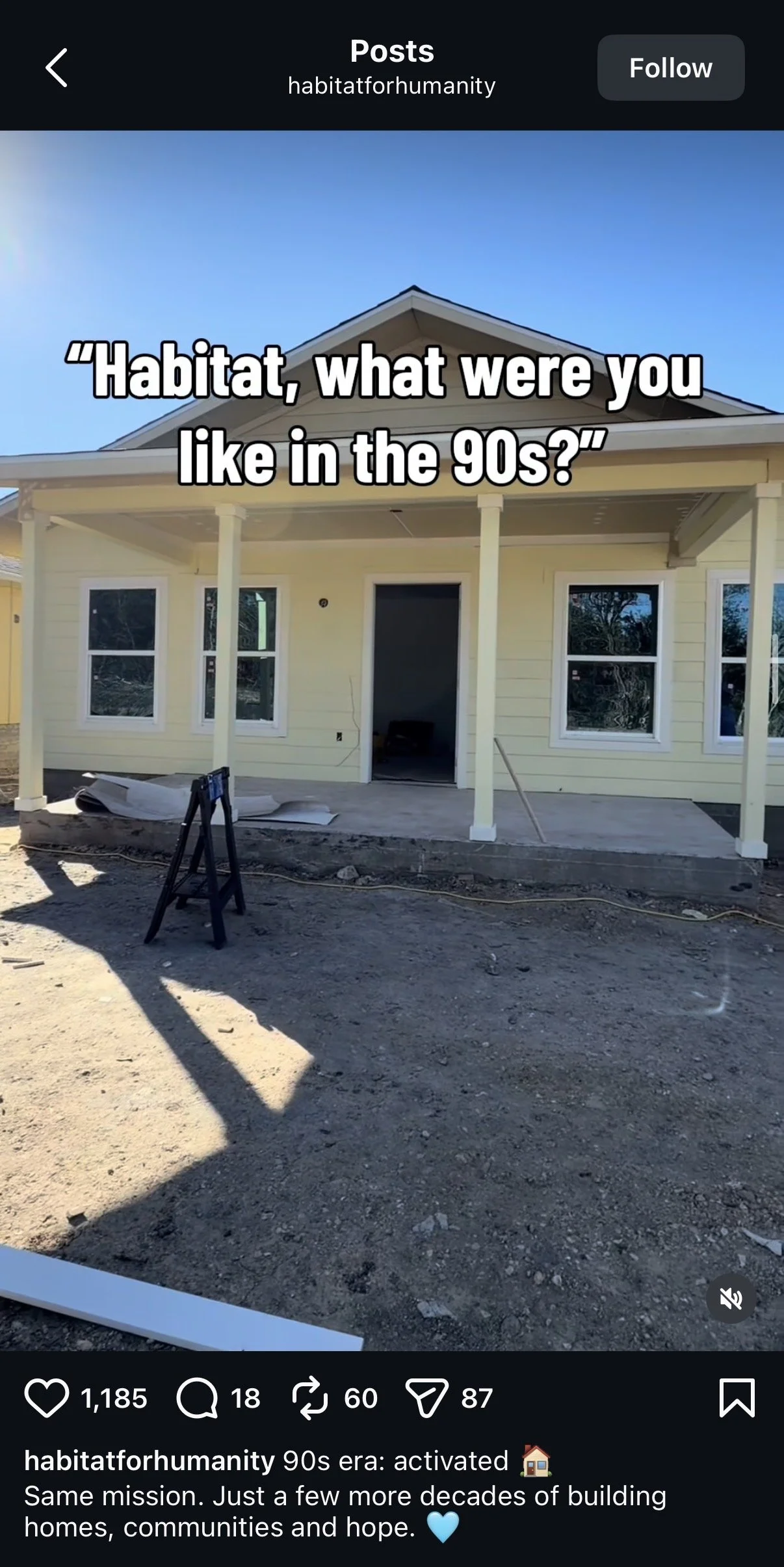
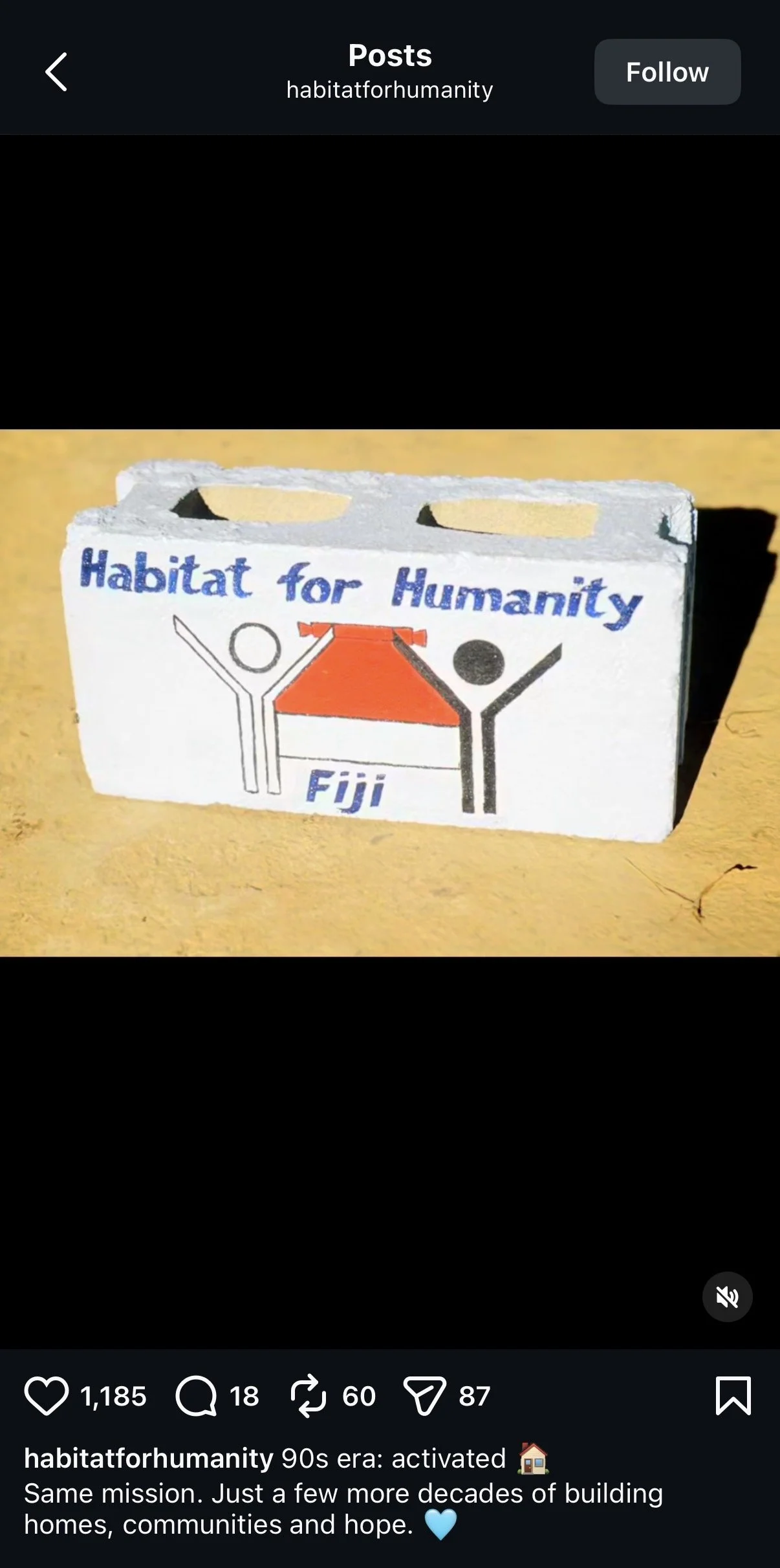
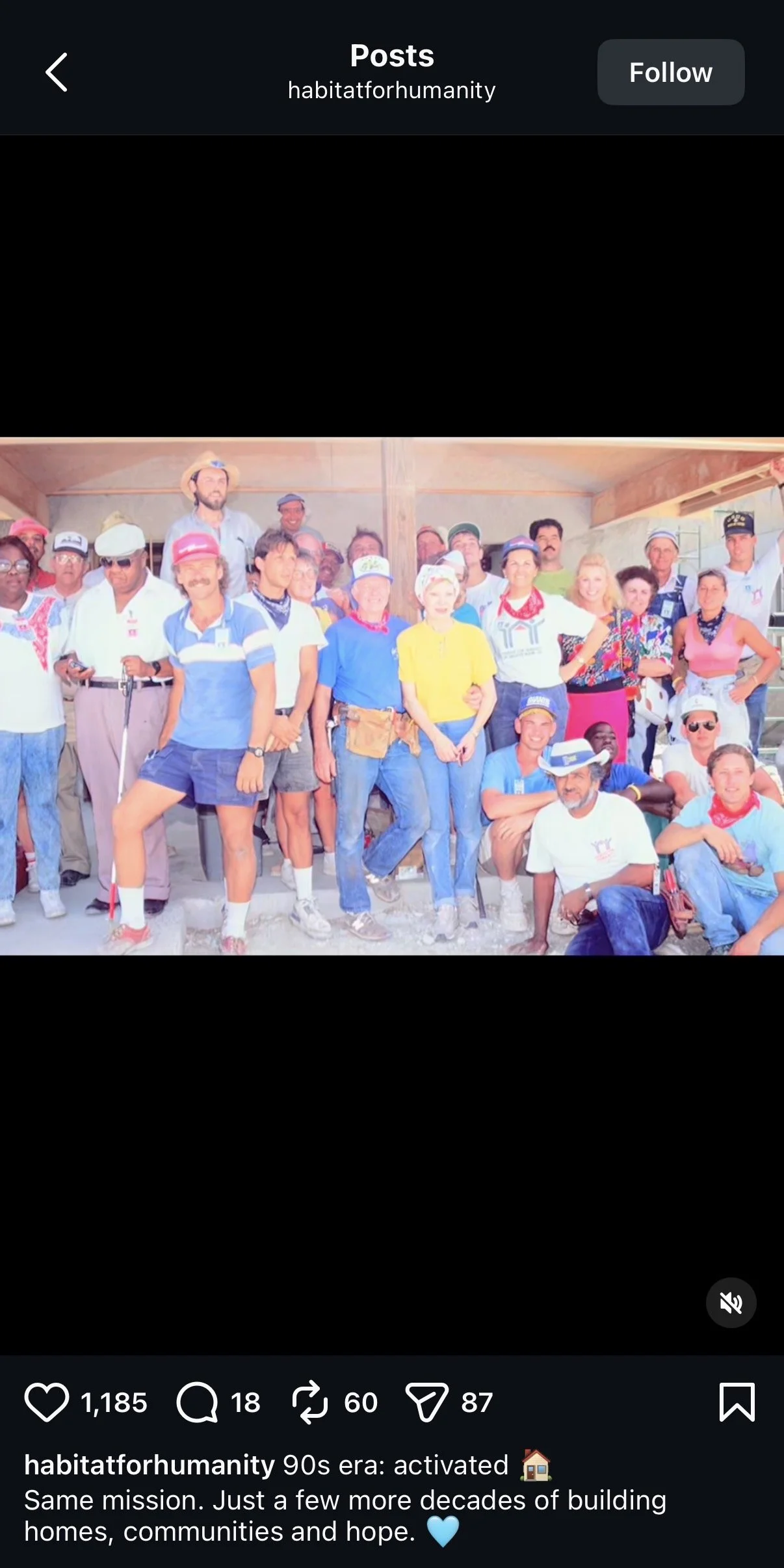
Relatable, meme-format content earns post shares, not just likes (like “Habitat, what were you like in the 90’s”)
Playful posts build affinity that makes future appeals land stronger
Trending audio in humor Reels extends reach beyond existing followers
Organizational personality, not performance, makes the voice feel earned
Consistent enough to be a pattern, varied enough to stay surprising
What I’m Watching
Whether other nonprofits find the specific boundary that makes humor work for their mission, and whether they’re willing to hold it consistently rather than retreating after the first post that feels risky.