charity: water Makes It Possible to Write Your Will in Five Minutes
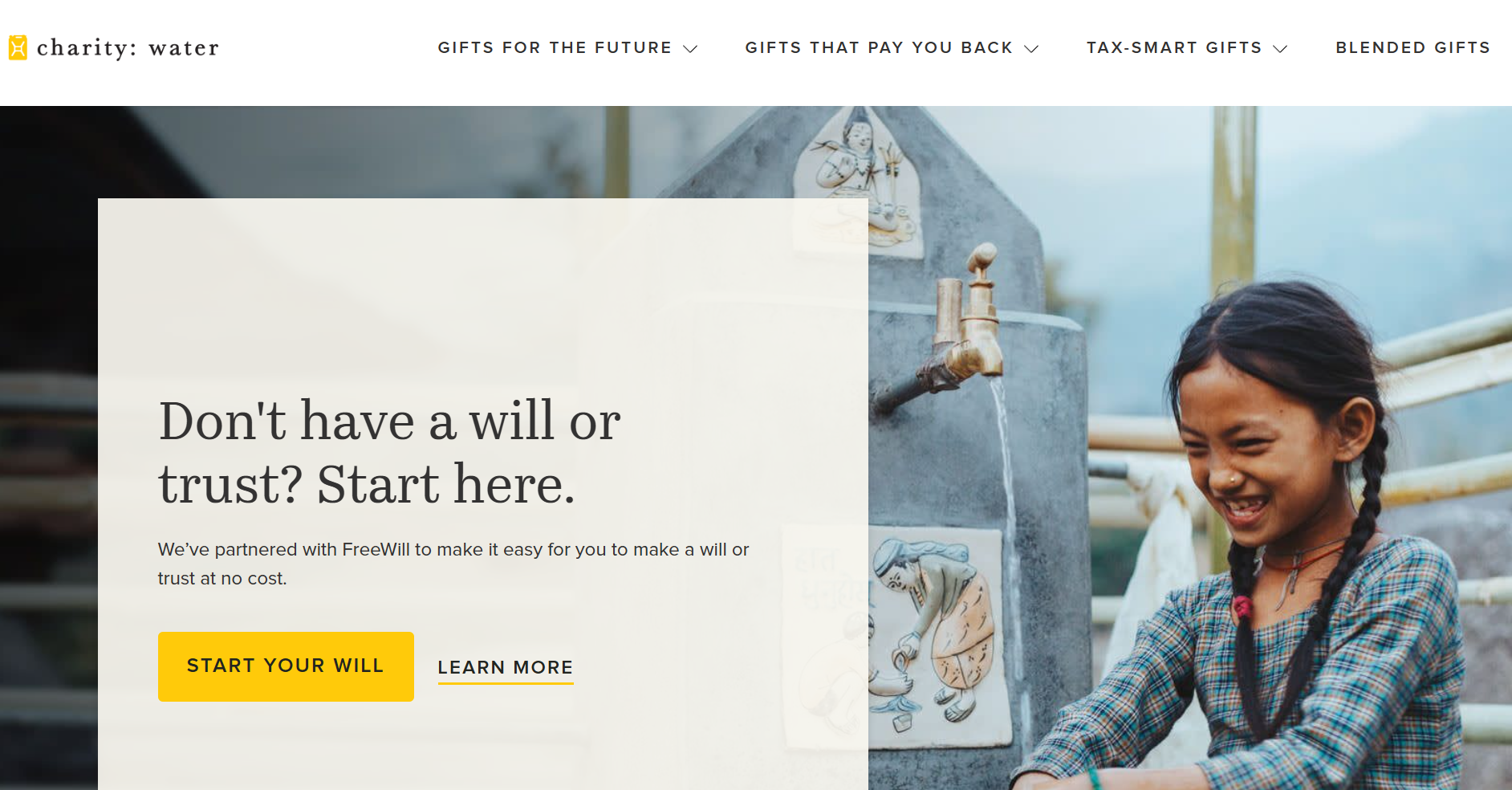
charity: water planned giving page featuring FreeWill partnership prompt, April 2026
charity: water, Observed April 2026
Interface: Planned Giving Page
Lens: Reduce Barriers
Pattern: Embedded Barrier Removal
Key Signal
A complex action is reduced to a free, immediate starting point through an embedded partner service.
Why It Matters
Removes friction that typically delays or prevents action, making participation feel accessible now rather than someday.
Observation
Within the Take Action section, charity: water presents multiple ways to get involved. One pathway leads to planned giving. The first interface is not an explanation of legacy donations, but a prompt:
“Don’t have a will or trust? Start here.”
The message is paired with a clear offer. Users can create a will at no cost through a partner platform, FreeWill. The experience reframes planned giving from a future-oriented decision into an immediate, accessible action.
Instead of introducing complexity, the interface removes it before it can become a barrier.
Why It Matters
Legacy giving is often positioned as important but deferred. It carries assumptions of cost, effort, and expertise that delay action.
This approach changes that dynamic. By embedding a free, guided service directly into the experience, the organization reduces both perceived and actual friction.
The user is not asked to plan. They are invited to begin.
Why This Works
Reframes a complex decision as a simple starting point
Removes both financial and cognitive barriers upfront
Embeds action directly within the experience, rather than redirecting elsewhere
Aligns messaging (“start here”) with a clear, immediate next step
Positions legacy giving as accessible, not specialized
What I’m Watching
Whether more organizations begin embedding services that remove barriers to high-friction actions, particularly for pathways like planned giving that are often introduced but rarely activated.