Free to Use. Not Free to Make.
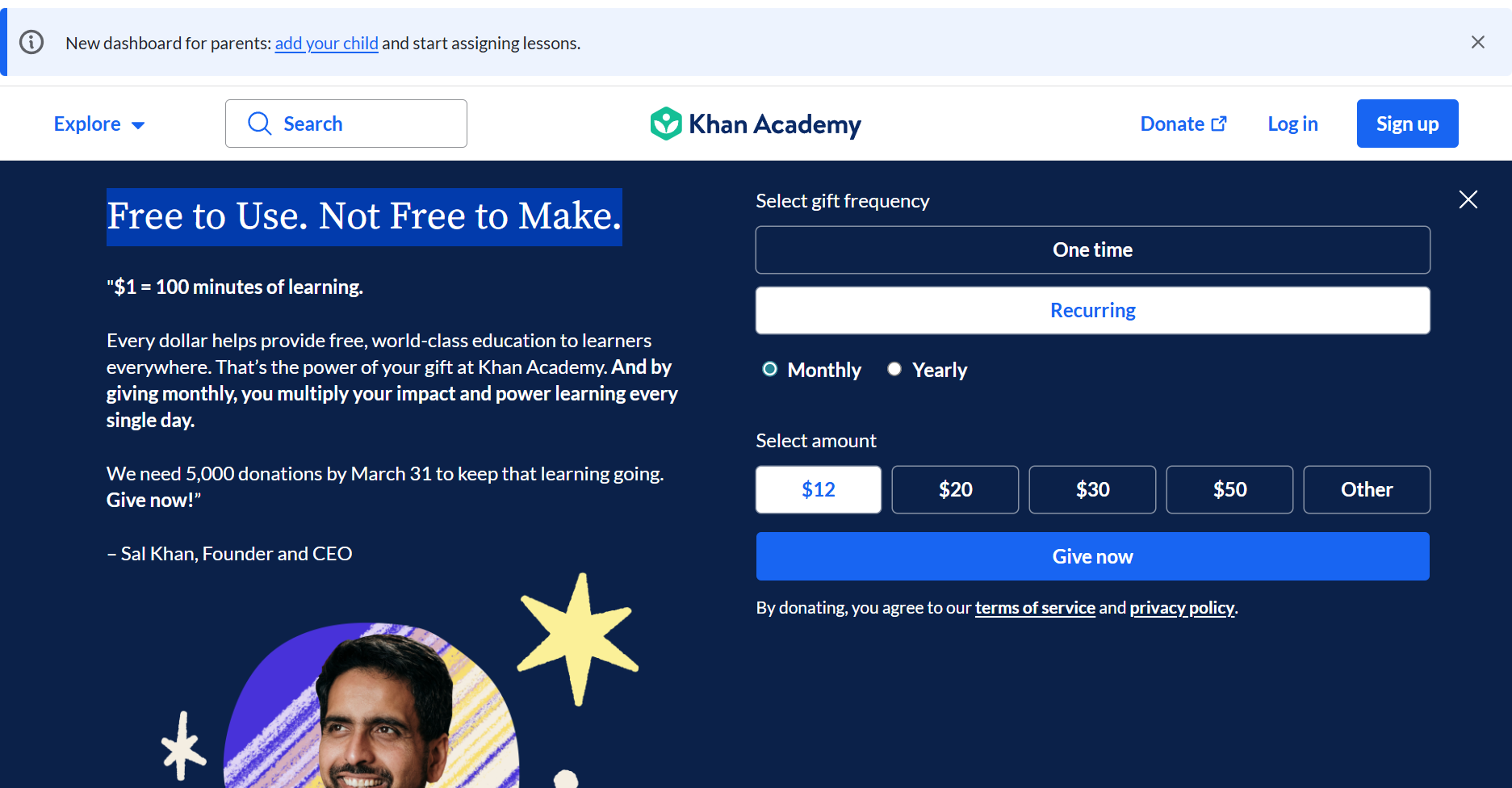
Khan Academy homepage donation interface showing “Free to Use. Not Free to Make.” messaging and donation module, March 2026
Khan Academy, Observed March 2026
Interface: Homepage donation interface
Lens: Invite Participation
Pattern: Cost-of-Free Framing
Key Signal
The homepage pairs a donation module with the message “Free to Use. Not Free to Make,” reframing a free product as something that requires ongoing investment.
Why It Matters
This resolves a core tension in the model. Visitors arrive expecting free access, but the interface introduces the cost behind that access before asking for support. By making the economics visible, the organization shifts giving from optional generosity to sustaining something the user already values.
Observation
Khan Academy’s homepage features a prominent donation interface paired with the message “Free to Use. Not Free to Make.” The fundraising module appears within the same homepage experience where visitors encounter the organization’s model for providing free education globally.
Beside the message, the interface includes suggested donation amounts, options for one-time or recurring giving, and a framing statement that translates donations into learning time: “$1 = 100 minutes of learning.”
Why It Matters
Khan Academy is widely known as a free learning platform. Many users arrive at the site precisely because it offers educational resources without cost. The homepage messaging addresses the tension created by that expectation. By pairing the donation interface with the statement “Free to Use. Not Free to Make,” the organization clarifies something that may not be obvious to visitors: free access for learners still requires significant investment behind the scenes. Placed directly within the user experience, the message reframes how visitors interpret the platform’s model before inviting them to give.
The impact metric further reinforces the connection between donation and outcome. Instead of presenting giving as a general contribution, the interface translates dollars into minutes of learning, linking donor participation directly to the activity users already value.
Why This Works
Names the hidden cost behind a free experience
Aligns the fundraising message with how users experience the product
Reframes giving as sustaining access, not supporting an organization
Reduces confusion about how a free model operates
Prepares users for the ask before presenting it
What I’m Watching
How often nonprofits that offer free digital services explicitly explain the cost structure behind those services within their user experience, and whether translating donations into units of core activity (such as minutes of learning, meals served, or sessions delivered) becomes a more common approach to connecting users with the cost of sustaining access.