Translating Donations into Learning Time
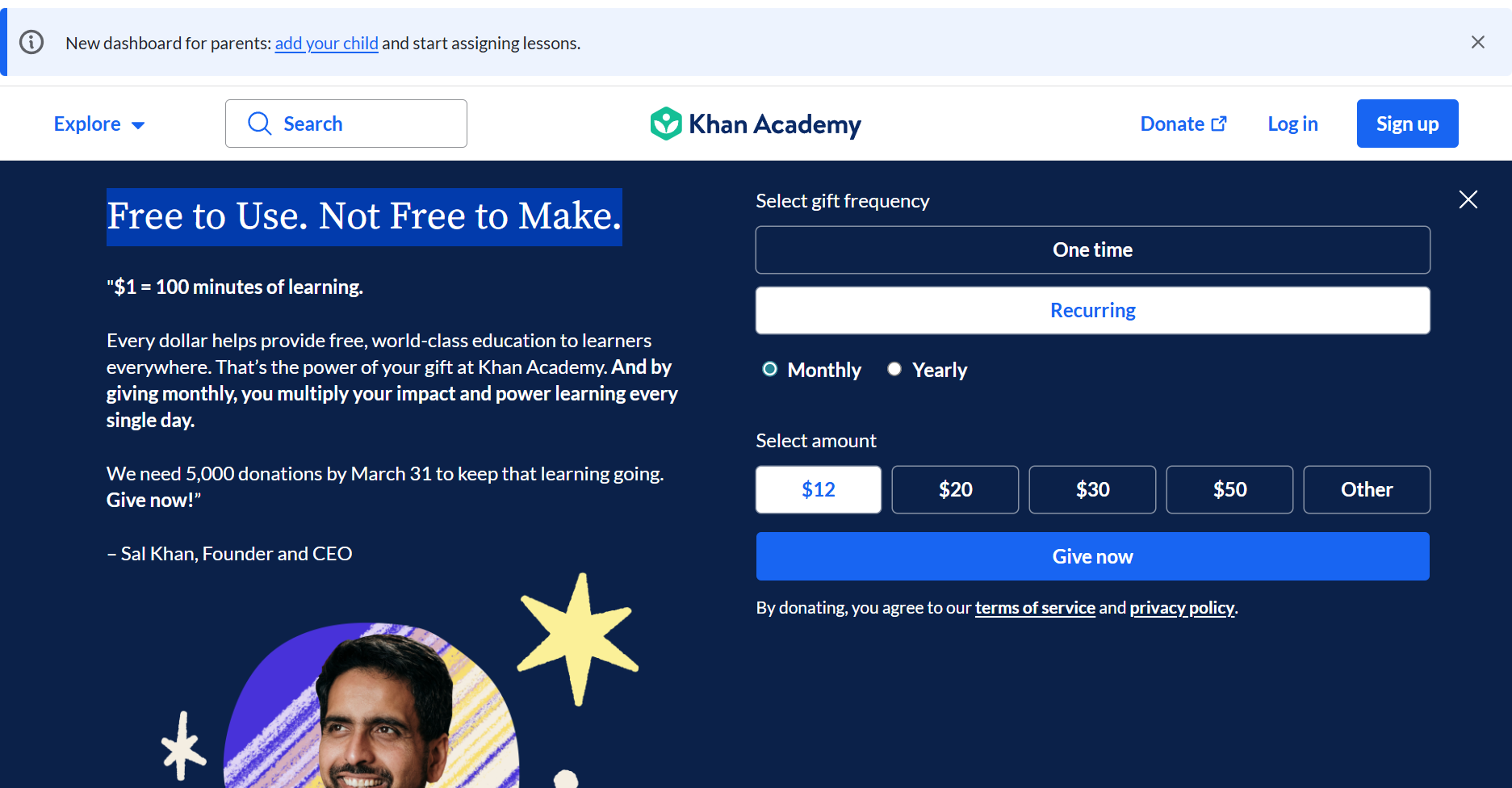
Khan Academy homepage donation interface with “Free to Use. Not Free to Make.” headline and impact metric (“$1 = 100 minutes of learning”), March 2026
Khan Academy, Observed March 2026
Interface: Donation module messaging
Lens: Explain the Work
Pattern: Impact Conversion Metric
Key Signal
The donation interface converts contributions into learning time (“$1 = 100 minutes of learning”), linking financial support directly to platform usage.
Why It Matters
This grounds impact in the organization’s core activity. Instead of translating donations into outputs like goods or services, the metric reflects how the platform is actually used, making the connection between contribution and experience immediate and intuitive.
Observation
Within the donation interface, Khan Academy translates contributions into learning time using the statement “$1 = 100 minutes of learning.” The metric links financial support directly to platform usage rather than to broader program outcomes.
Why It Matters
Many nonprofit fundraising messages translate donations into tangible goods or services, such as meals provided or trees planted. Khan Academy’s interface instead converts donations into minutes of learning. Because the organization operates a digital education platform, learning time is one of the most intuitive measures of impact. The metric connects donor contributions to the core activity taking place on the platform.
Why This Works
Aligns the metric with the organization’s core function (learning time)
Translates abstract funding into a concrete, relatable unit
Reduces ambiguity about how support is used
Makes impact feel continuous rather than one-time
Reinforces the value of a free-to-use platform
What I’m Watching
Whether other education and digital learning organizations translate donations into usage-based metrics such as hours of instruction, lessons completed, or learning sessions delivered.