“Nature Needs You” Reframes Urgency Around the Individual
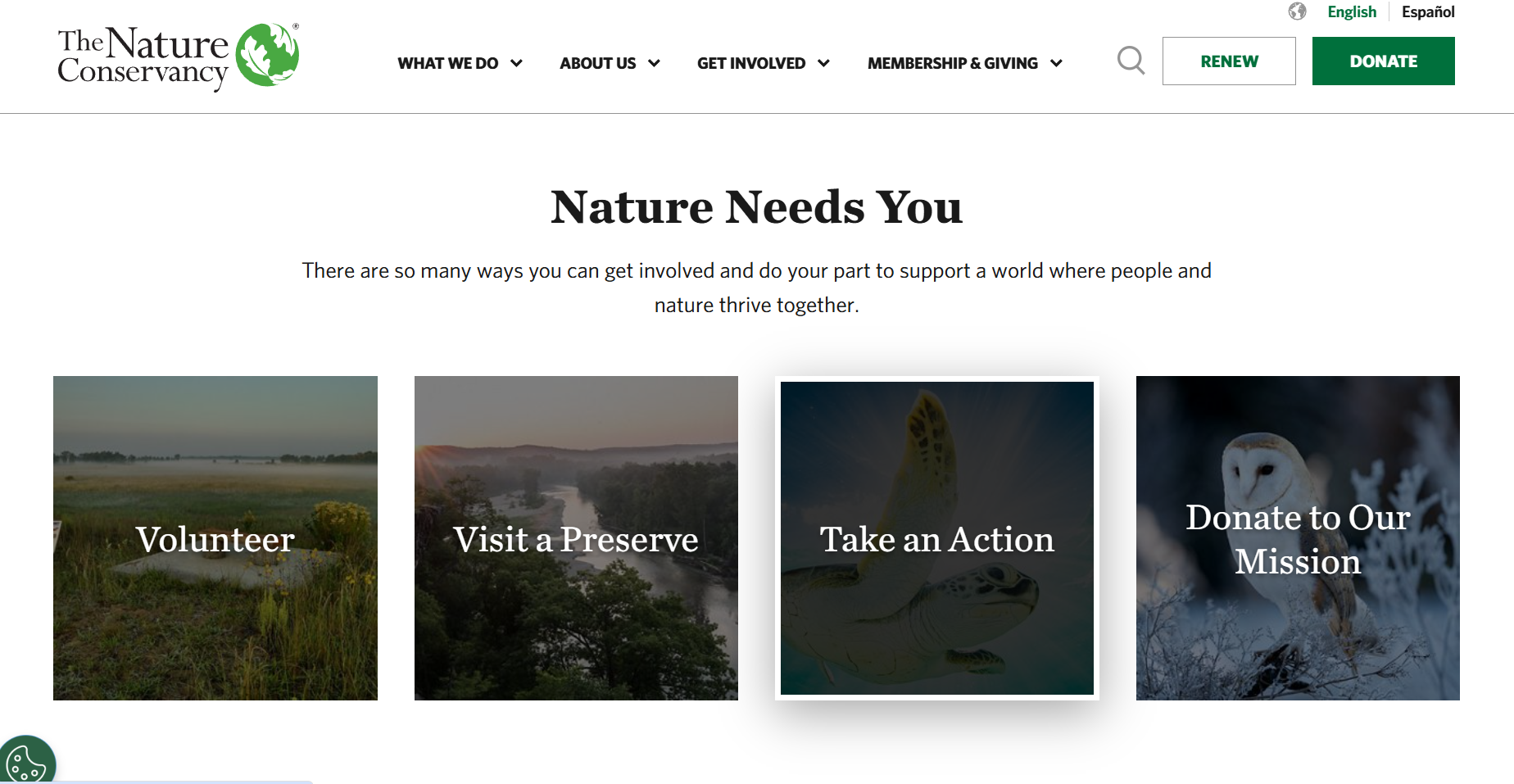
The Nature Conservancy mobile homepage participation section featuring the headline “Nature Needs You” and engagement options including Volunteer, Visit a Preserve, Take Action, and Donate, March 2026
The Nature Conservancy, Observed March 2026
Interface: Homepage participation section
Lens: Invite Participation
Pattern: Individual-Centered Urgency Framing
Key Signal
The headline “Nature Needs You” positions the visitor as directly responsible for responding to the problem, rather than supporting the organization’s efforts.
Why It Matters
This reframes participation from optional support to personal responsibility. The organization is no longer the primary actor. The visitor is positioned as someone whose involvement is necessary to address the issue.
Observation
The participation section on The Nature Conservancy homepage opens with the headline “Nature Needs You.” The phrase appears above several engagement options including volunteering, visiting a preserve, taking action, and donating.
The wording differs from phrases such as “Help us save nature,” “Protect wildlife today,” or “Support conservation.” Those messages position the organization as the primary actor responding to a problem.
“Nature Needs You,” by contrast, shifts the focus to the visitor. The message positions the individual as someone whose participation directly affects the outcome.
Why It Matters
Environmental messaging often asks people to help organizations solve a problem. “Nature Needs You” reverses that framing. The problem exists first, and the individual is positioned as someone needed to address it.
Rather than presenting conservation as something the organization is doing on behalf of the public, the language invites visitors to see themselves as necessary participants in protecting the natural systems the organization works to sustain.
The message reframes the relationship from supporting an organization to personally responding to a need.
Why This Works
Shifts urgency from the organization to the individual
Reduces distance between the problem and the audience
Makes participation feel necessary rather than supportive
Aligns the call to action with identity, not just behavior
Reinforces agency across multiple engagement options
What I’m Watching
Whether more nonprofits adopt language that personalizes urgency, positioning the visitor as someone whose individual participation is necessary rather than optional.