The Nature Conservancy's Homepage Hero Uses Community Photography, Not Stock Imagery
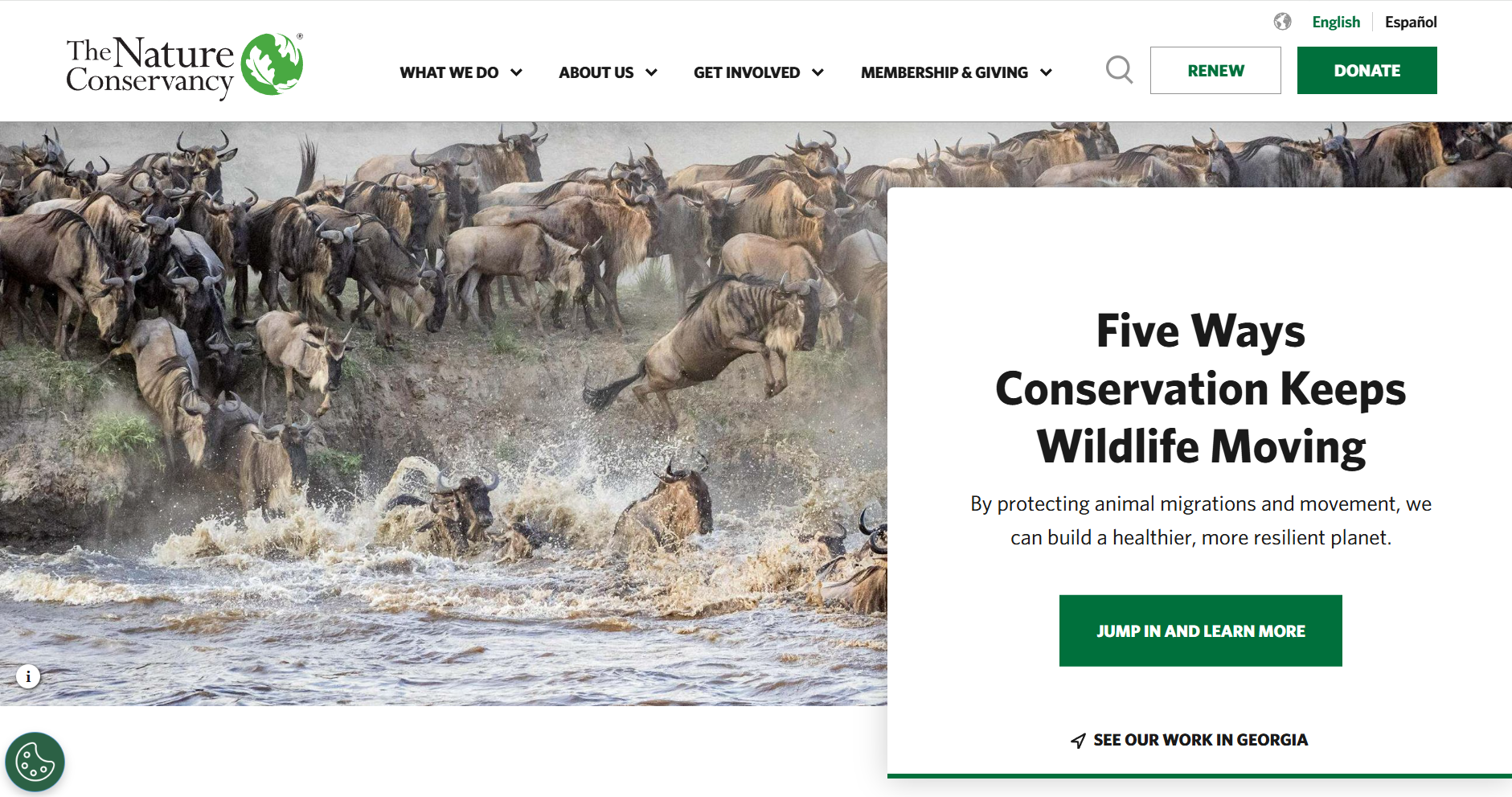
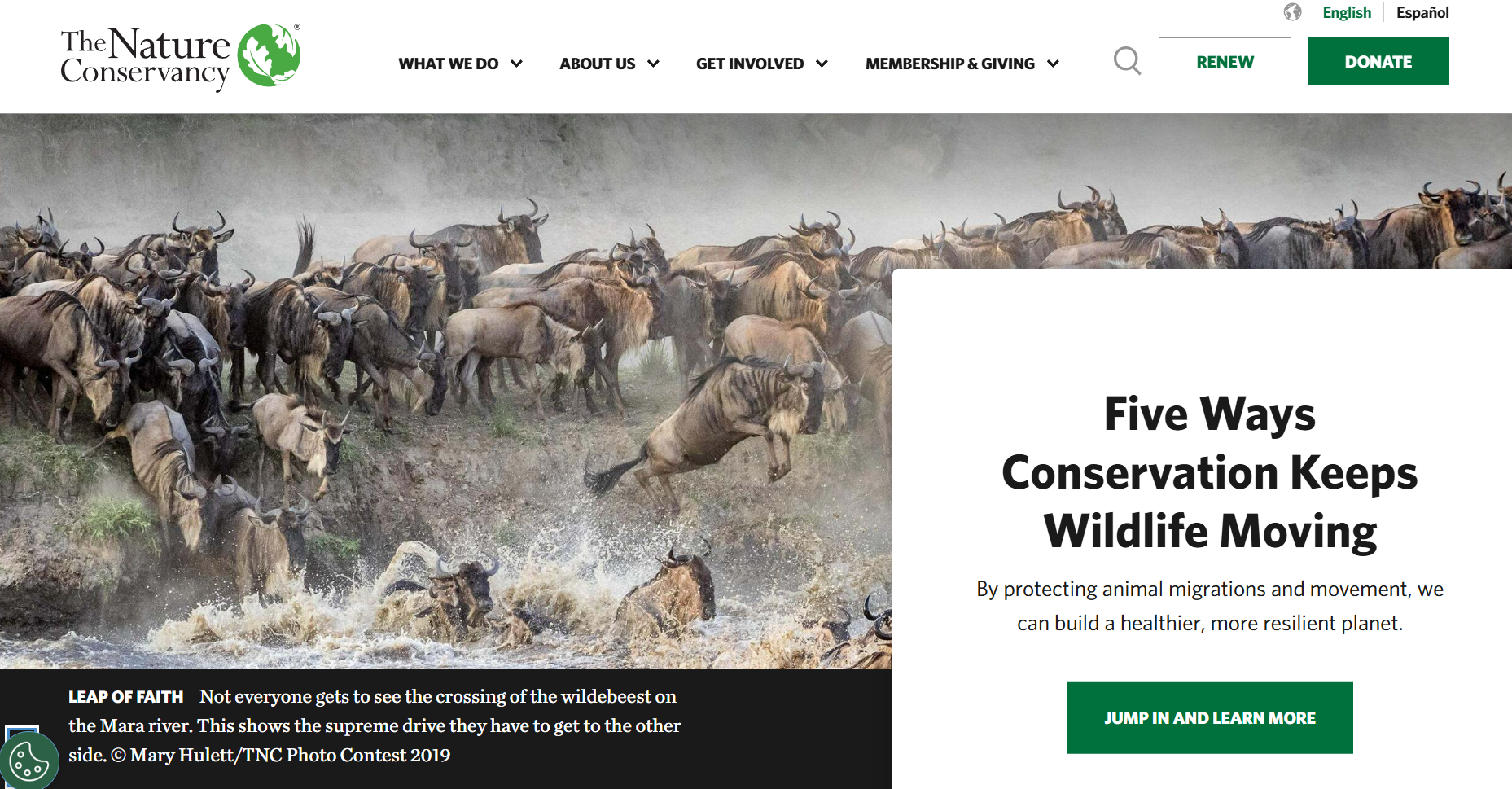
Nature Conservancy homepage hero image with information tooltip crediting Mary Hulett from the TNC Photo Contest, March 2026
The Nature Conservancy, March 2026
Interface: Homepage hero image
Lens: Explain the Work
Pattern: Community-Generated Imagery
Issue Area: Environment
Key Signal
The homepage hero image includes an information icon that reveals the photographer and source.
The image is credited to a participant from a past photography contest.
Why It Matters
When the photos on a nonprofit's homepage are community sourced, the site starts to look less like a corporate brochure and more like real life.
Observation
The hero image on The Nature Conservancy homepage includes an information icon that reveals the source of the photograph. When opened, the caption explains that the image comes from a past Nature Conservancy photography contest and credits the photographer.
Why It Matters
Many nonprofit websites rely on stock imagery or internally produced photography. By featuring images from a photography contest, the organization integrates supporter-generated content directly into the design of the website. The visual storytelling on the homepage reflects the perspectives of people who have engaged with the organization’s work.
Why This Works
Integrates supporter contributions into core site design
Signals authenticity through real participant perspectives
Adds transparency with visible attribution
Reinforces connection between audience and mission
Differentiates from generic or stock visual storytelling
What I’m Watching
Whether nonprofits increasingly incorporate supporter-generated photography and storytelling into their core website design rather than using stock imagery alone.