The Nature Conservancy's Homepage Changes Based on Where You Live
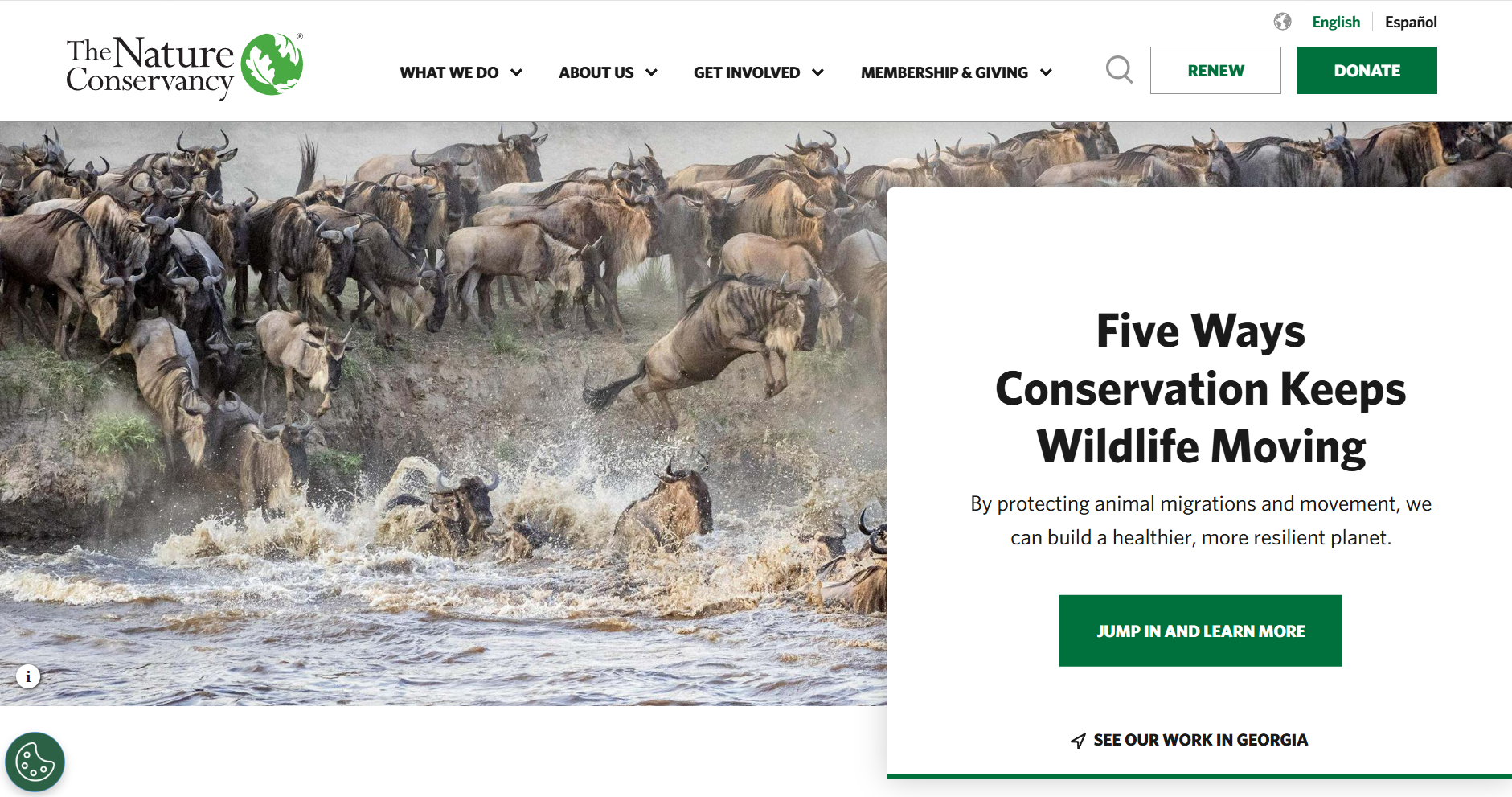
The Nature Conservancy homepage showing location-personalized message inviting visitors to explore conservation work in their local area (Georgia), March 2026
The Nature Conservancy, Observed March 2026
Interface: Homepage location message
Lens: Invite Participation
Pattern: Location-Based Personalization
Key Signal
The homepage detects the visitor’s location and prompts them to explore conservation work specific to their region.
Why It Matters
Who a homepage is talking to geographically is often underestimated. The Nature Conservancy doesn't. It leverages geotargeting to ensure visitors know what's happening near them, making a global mission feel like something they're personally connected to
Observation
When visiting The Nature Conservancy homepage, the site displays a message asking whether the visitor would like to explore conservation work in their local area. In this instance, the page detected the visitor’s location and presented the option to view conservation work in Georgia.
Selecting the link directs the visitor to a page highlighting conservation initiatives specific to that state, including an annual report describing regional projects and impact.
Rather than presenting only a national overview of the organization’s work, the homepage surfaces conservation efforts happening near the visitor’s location.
Why It Matters
Large nonprofits often communicate their work through national campaigns or global impact summaries. Location detection introduces a different entry point by connecting the mission to the visitor’s immediate environment.
By showing conservation work happening nearby, the organization shortens the distance between the mission and the audience. Visitors are not only learning about conservation broadly, they are seeing how it relates to landscapes, ecosystems, and communities close to where they live.
This approach personalizes the mission without changing the message itself. The work remains the same, but the starting point for understanding it becomes locally relevant.
Why This Works
Introduces local relevance at the first point of interaction
Connects a global mission to a specific place without changing the message
Gives visitors a clear, personalized next step
Makes exploration feel contextual rather than generic
Reinforces that impact is happening in places people recognize
What I’m Watching
Whether other nonprofits use location detection to surface local programs, impact reports, or volunteer opportunities and how frequently personalization is used to connect national missions to place-based work.