Using Text-First Posts to Speak Directly
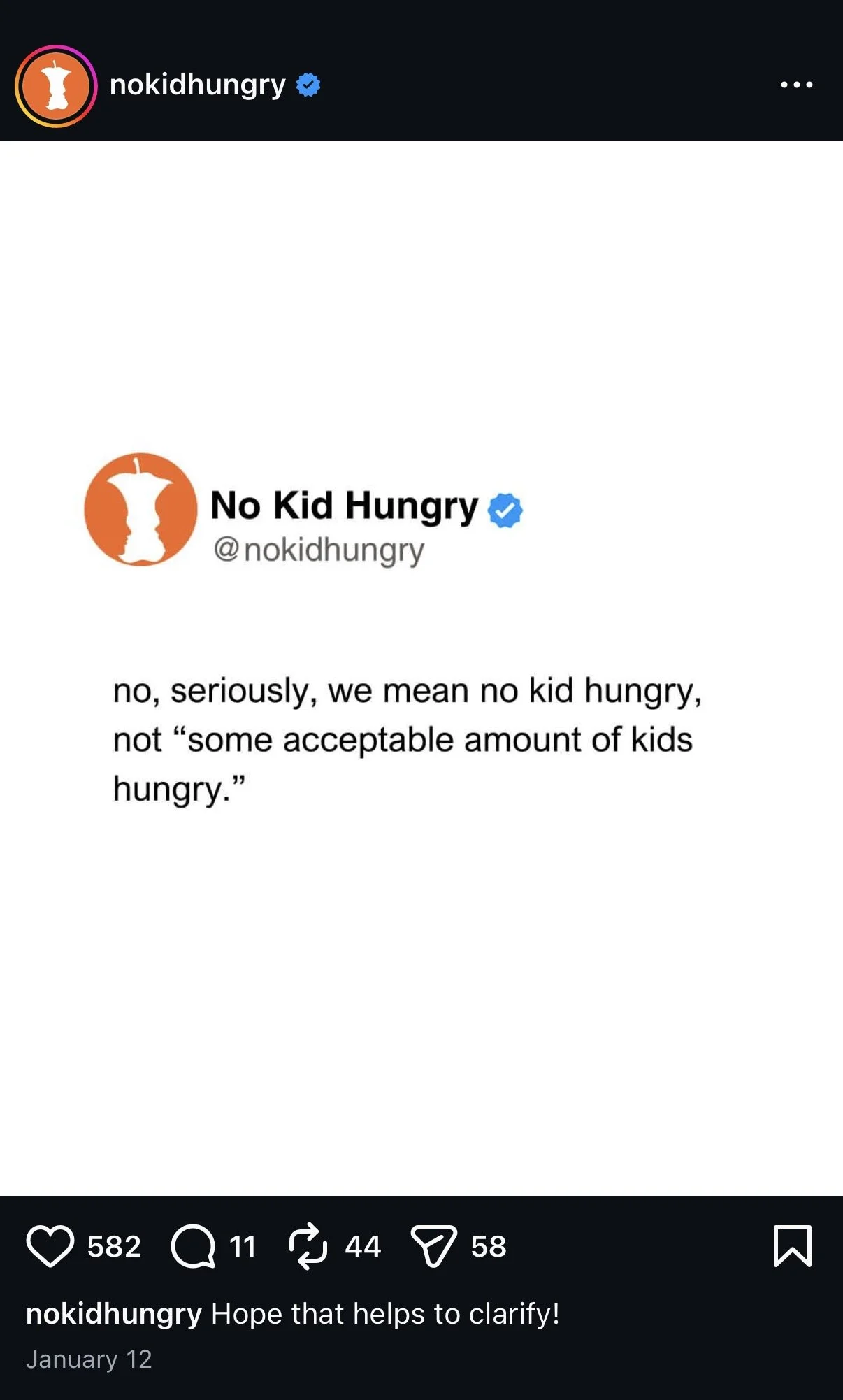
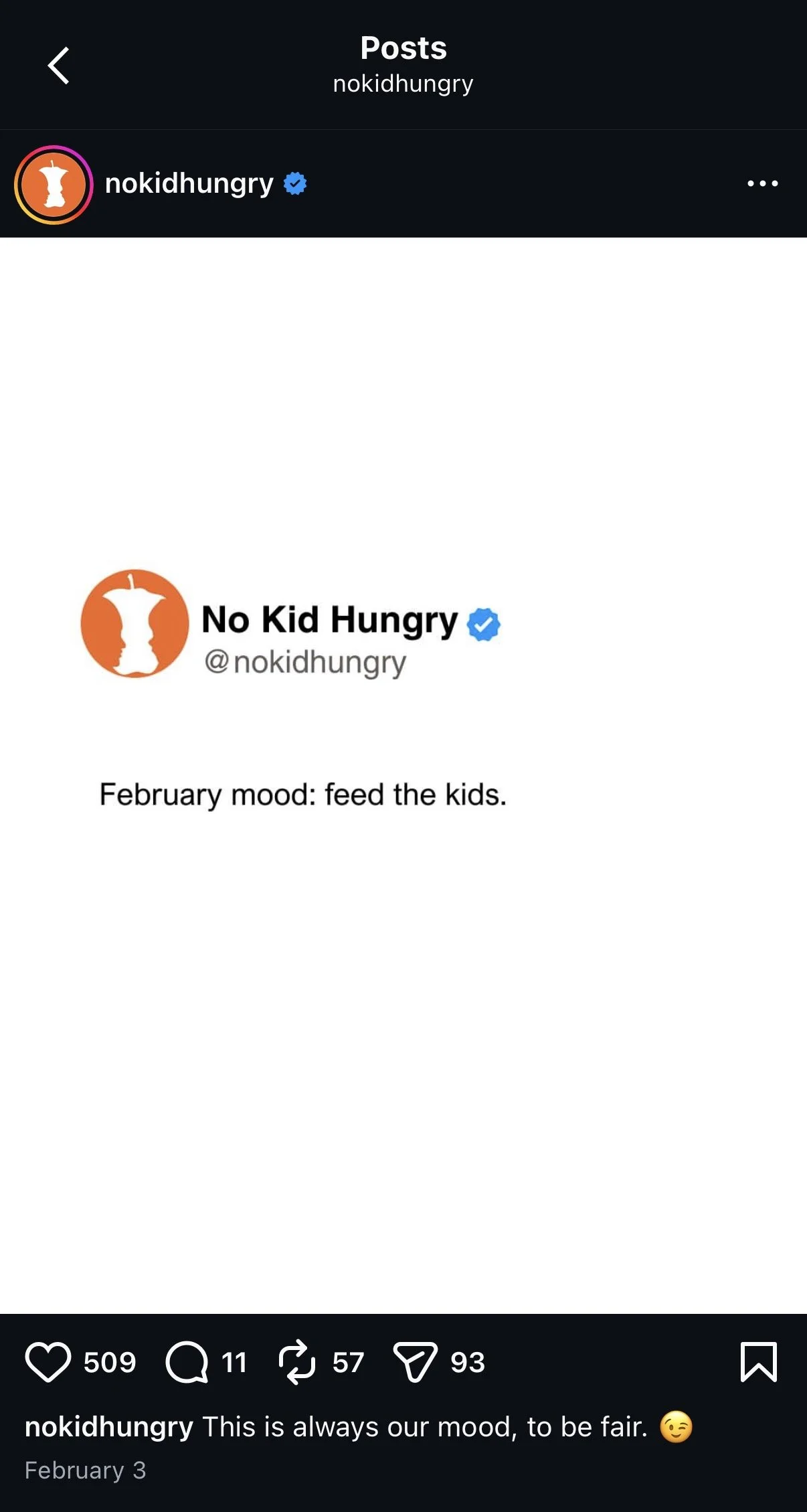
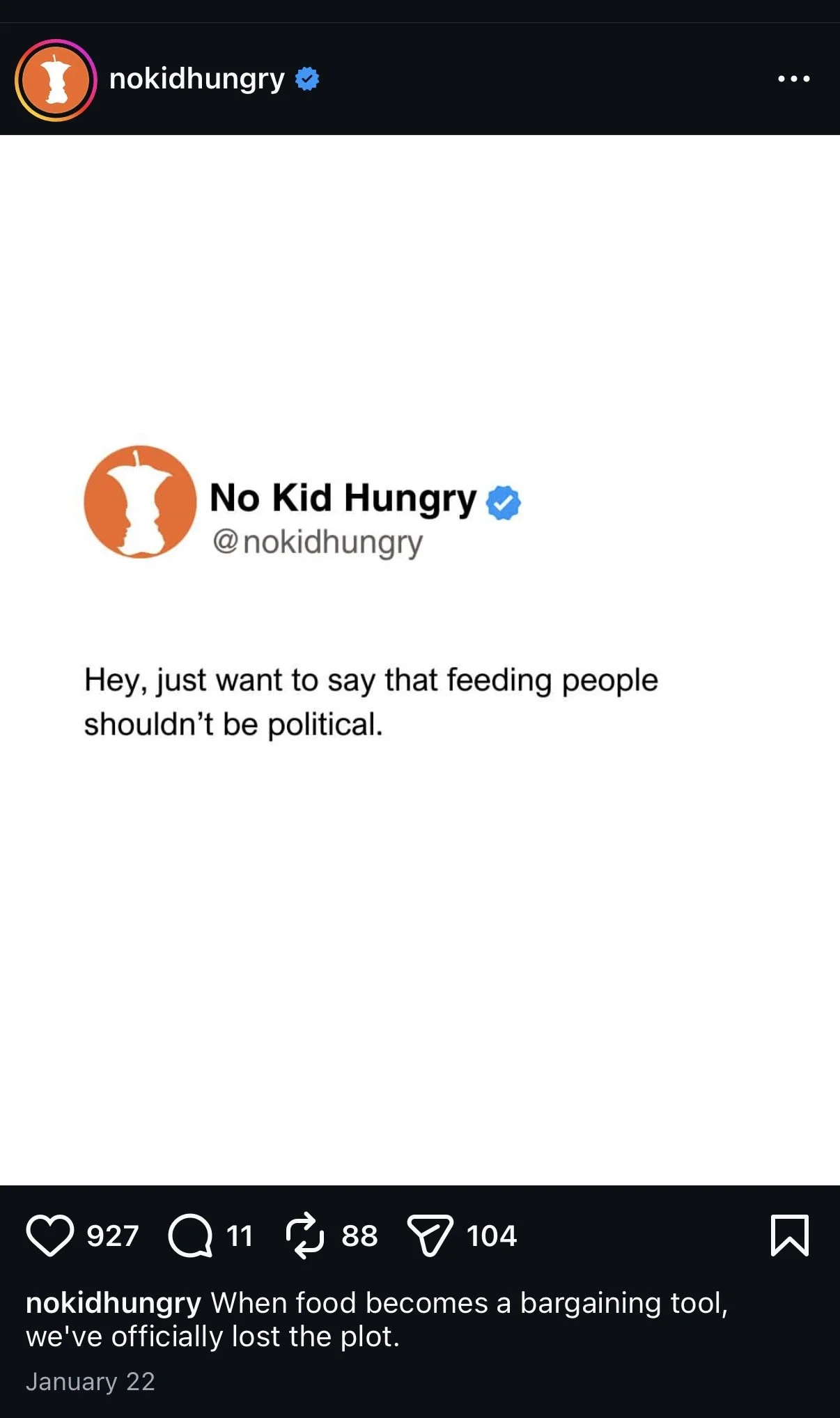
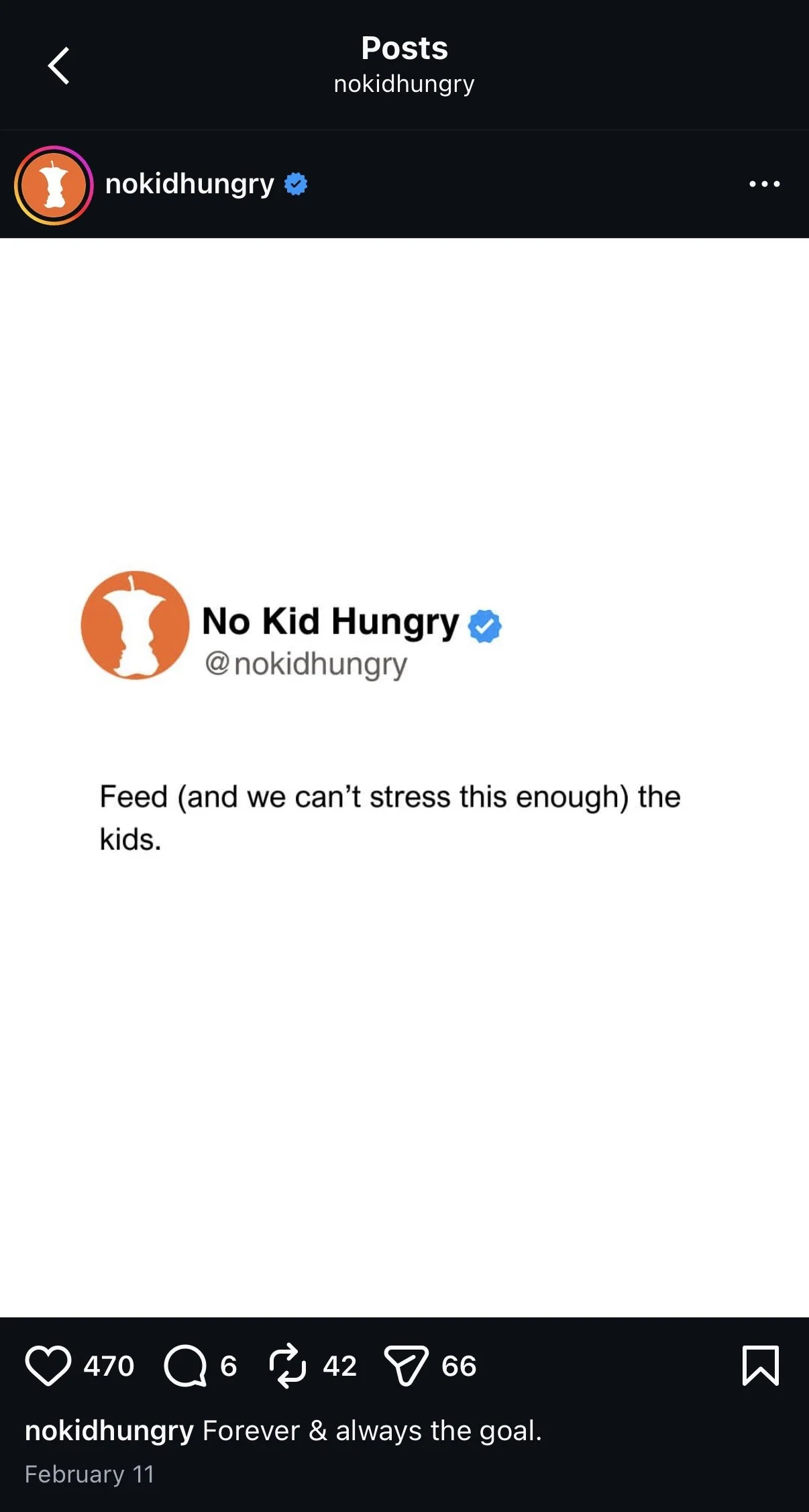
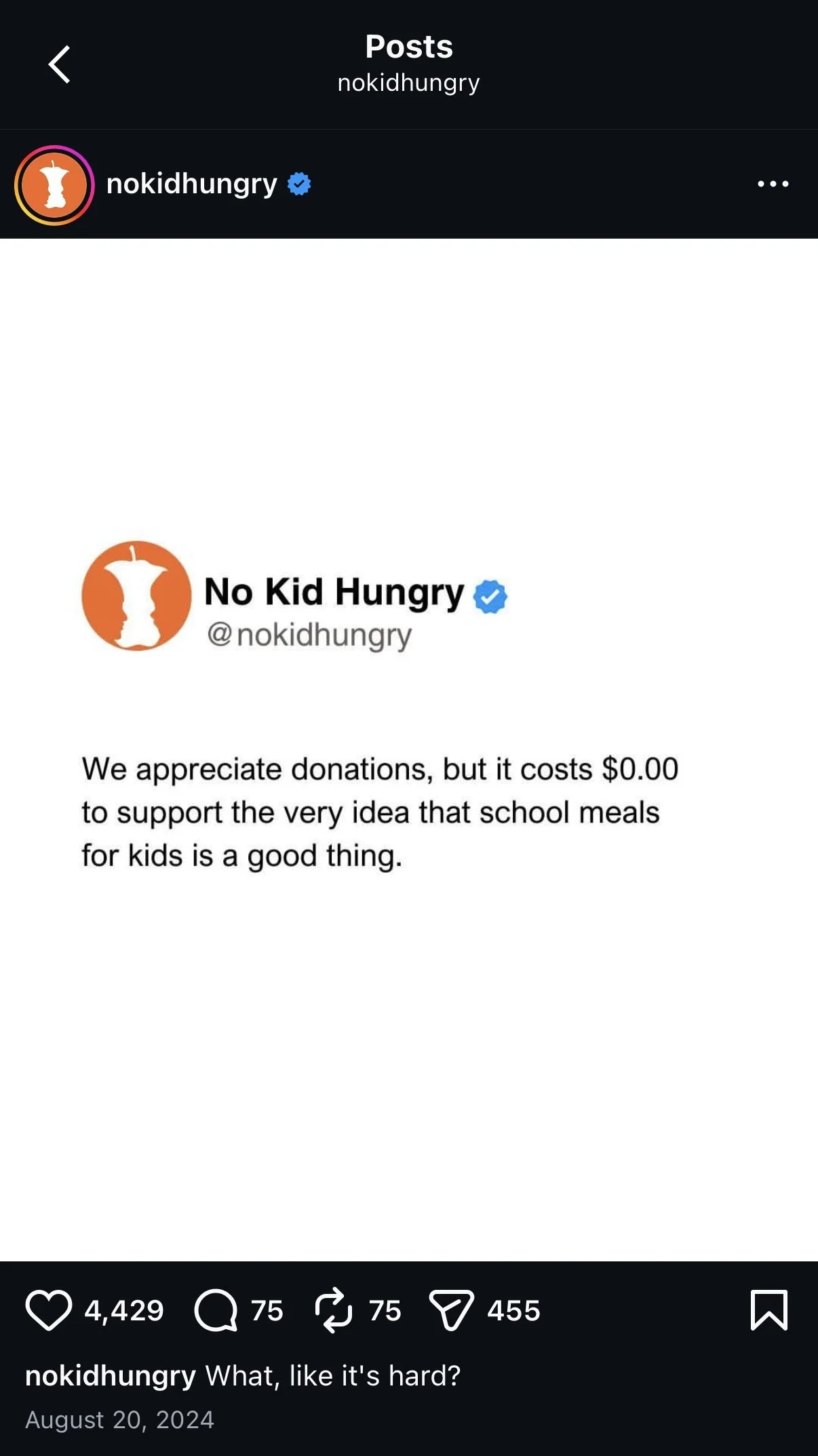
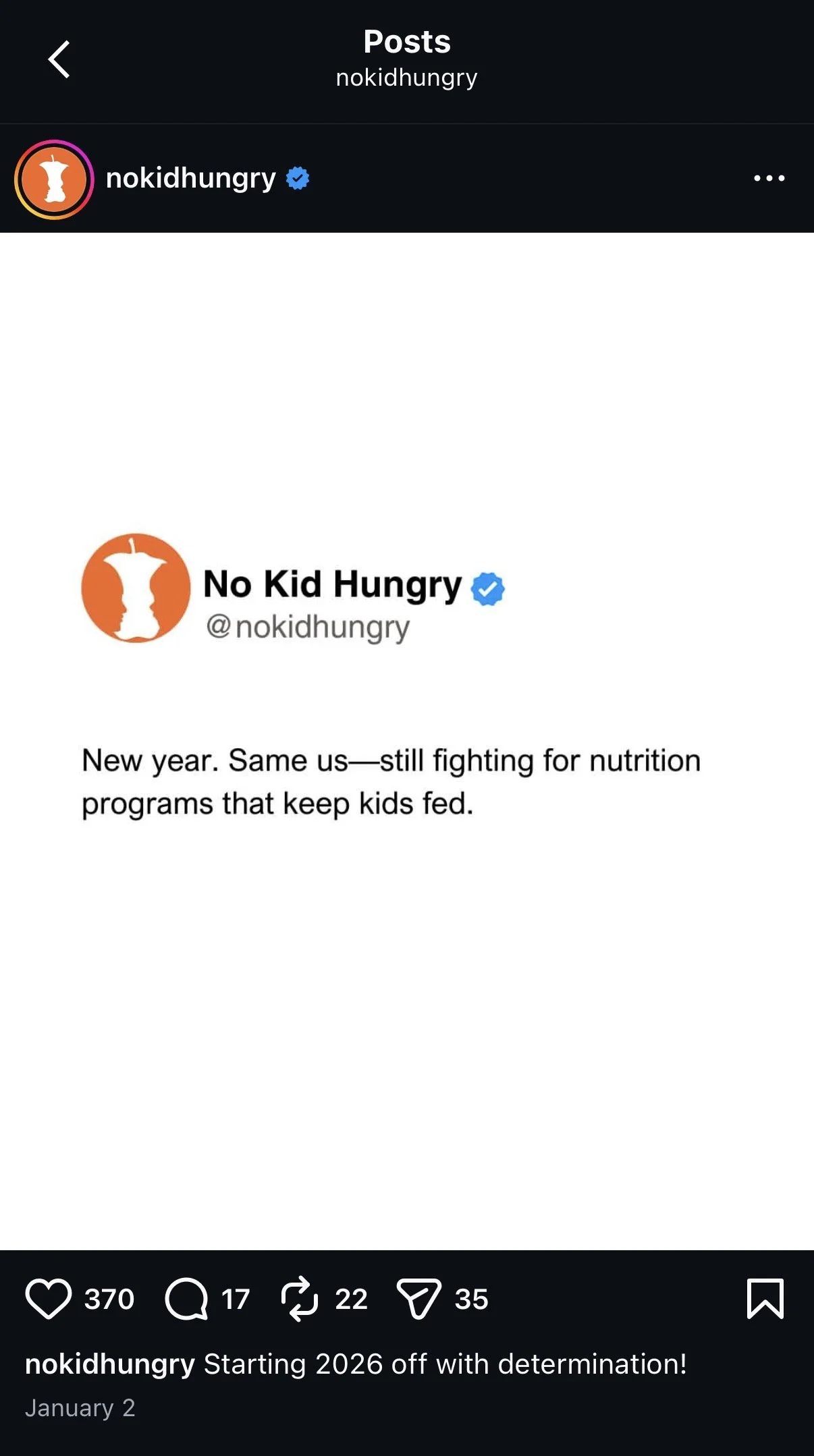
No Kid Hungry Instagram post using a text-first graphic resembling a social media text post, March 2026
No Kid Hungry, Observed March 2026
Interface: Social media content format
Lens: Explain the Work
Pattern: Statement-Driven Content
Key Signal
The organization uses text-first posts written as direct, conversational statements, often resembling platform-native text posts rather than designed campaign graphics.
Why It Matters
These posts shift how the organization communicates. Instead of presenting polished campaign messaging, the content reads like something a person would say. This creates immediacy and clarity, allowing the organization to express positions, reinforce values, and engage audiences in a more direct voice.
Observation
Within the No Kid Hungry Instagram feed, occasional posts appear as simple text statements on a white background. The format resembles an X or text-style post rather than a designed campaign graphic. These posts often adopt a more conversational or direct tone than the organization’s typical program or advocacy content.
Why It Matters
Most nonprofit Instagram feeds rely heavily on photography, designed graphics, and informational visuals. Text-first posts break the visual pattern of the feed and create a moment of contrast that draws attention. The format also allows organizations to speak in a more immediate or conversational voice, which can feel closer to how people communicate on social platforms.
Why This Works
Mirrors how people naturally communicate on social platforms
Creates a more direct and human tone
Cuts through visually dense feeds with simplicity
Allows organizations to express clear positions or beliefs
Reduces reliance on heavy design to carry meaning
What I’m Watching
Whether more nonprofit organizations incorporate text-first or “statement” style posts within visually curated feeds as a way to interrupt scrolling patterns and introduce a more relatable voice.