Product-Anchored Fundraising Through Consumer Trends
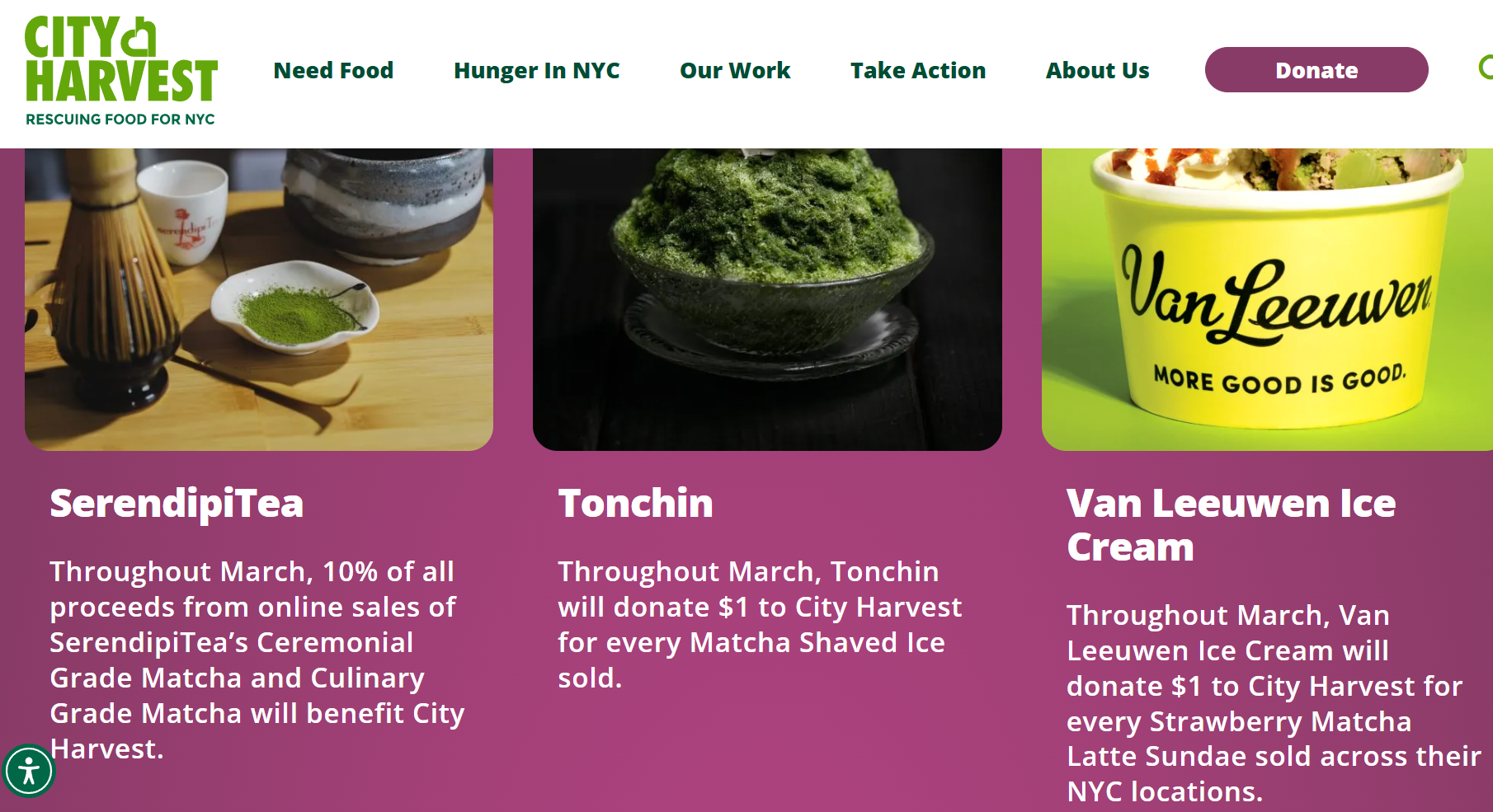
City Harvest Matcha Madness campaign page showing store participation, March 2026
City Harvest, March 2026
Interface: Campaign strategy
Lens: Invite Participation
Pattern: Product-Anchored Fundraising
Issue Area: Hunger
Key Signal
The campaign centers participation on selling matcha drinks or menu items.
A portion of sales from this specific product category supports the mission.
Why It Matters
Tying fundraising to an existing consumer behavior lowers the barrier to participation.
Observation
City Harvest’s “Matcha Madness” campaign invites cafés and restaurants to offer matcha drinks or menu items and donate a portion of those sales to support hunger relief. Rather than tying the campaign to overall restaurant revenue, participation centers on a single product category that is already popular across many café menus.
Why It Matters
Anchoring the campaign to a specific product connects the cause to an existing consumer habit. Matcha has become a strong and visible trend across cafés and specialty drink menus, making the concept easy for both businesses and customers to understand. The campaign attaches the mission to something people are already seeking out and purchasing.
Why This Works
Aligns the campaign with an already popular product trend
Simplifies participation for businesses with a clear offering
Makes the impact easy for customers to understand at purchase
Avoids complexity of tracking overall revenue percentages
Embeds giving into a routine transaction
What I’m Watching
Whether more nonprofit partnerships anchor fundraising to specific consumer trends or product categories rather than a percentage of overall sales.