When the Impact Report Closes the Loop on the Strategic Plan
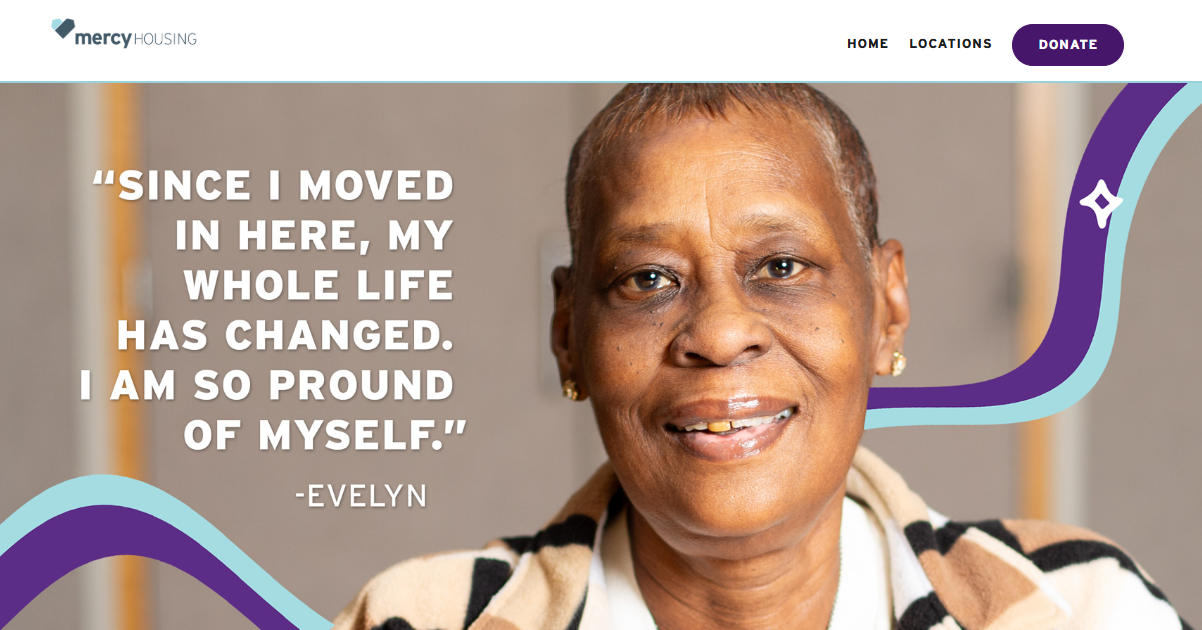
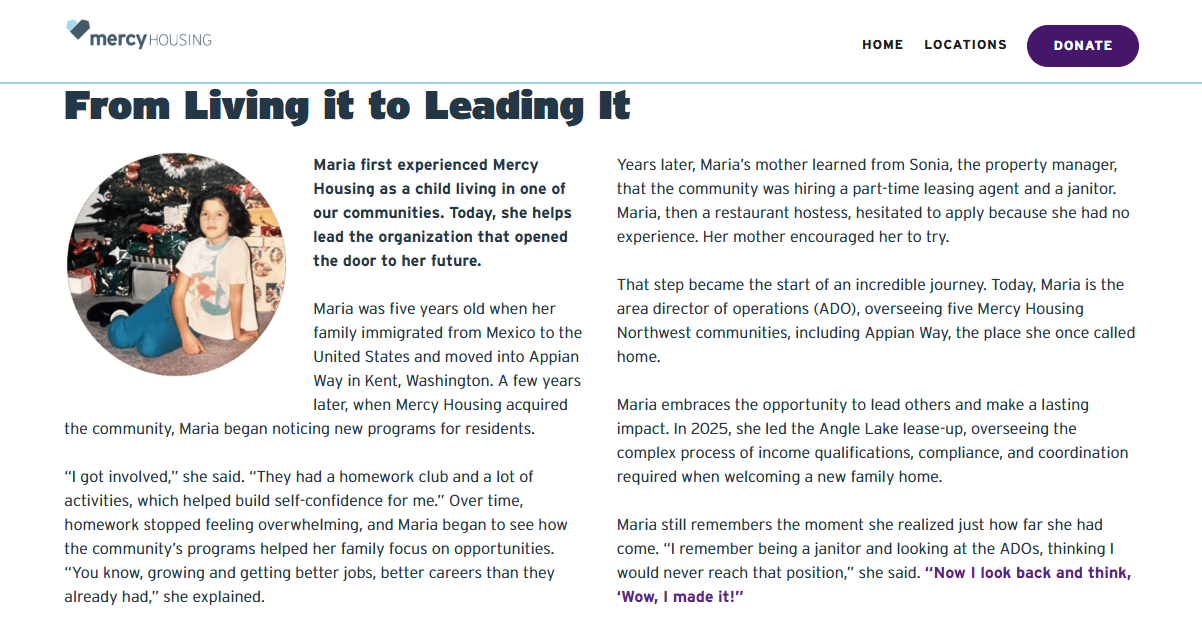
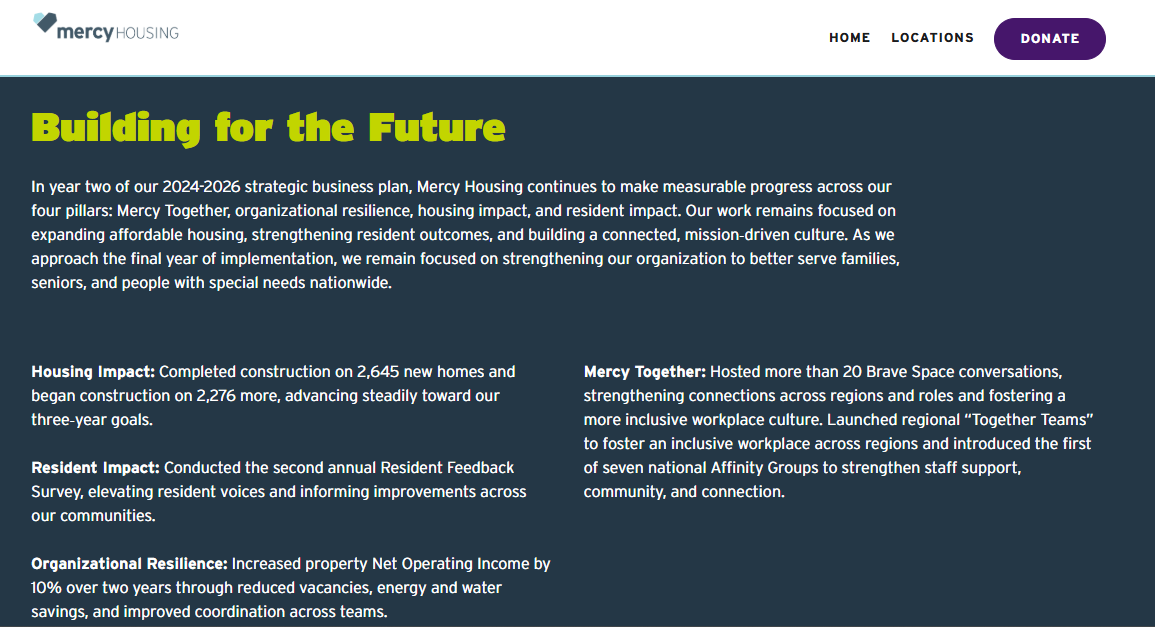
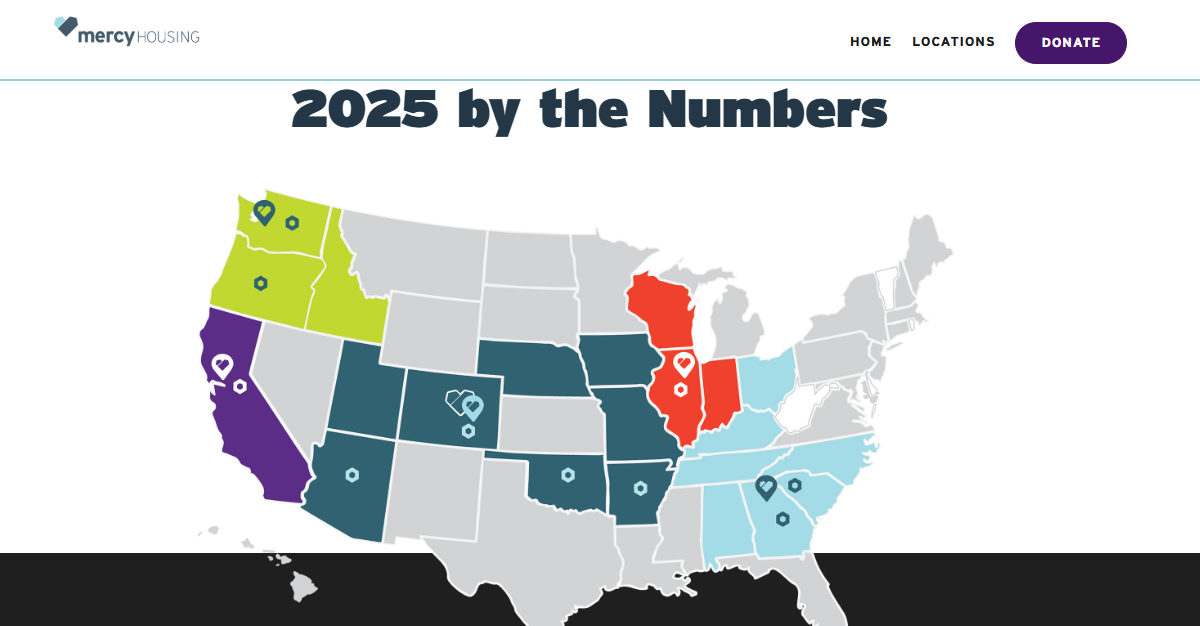
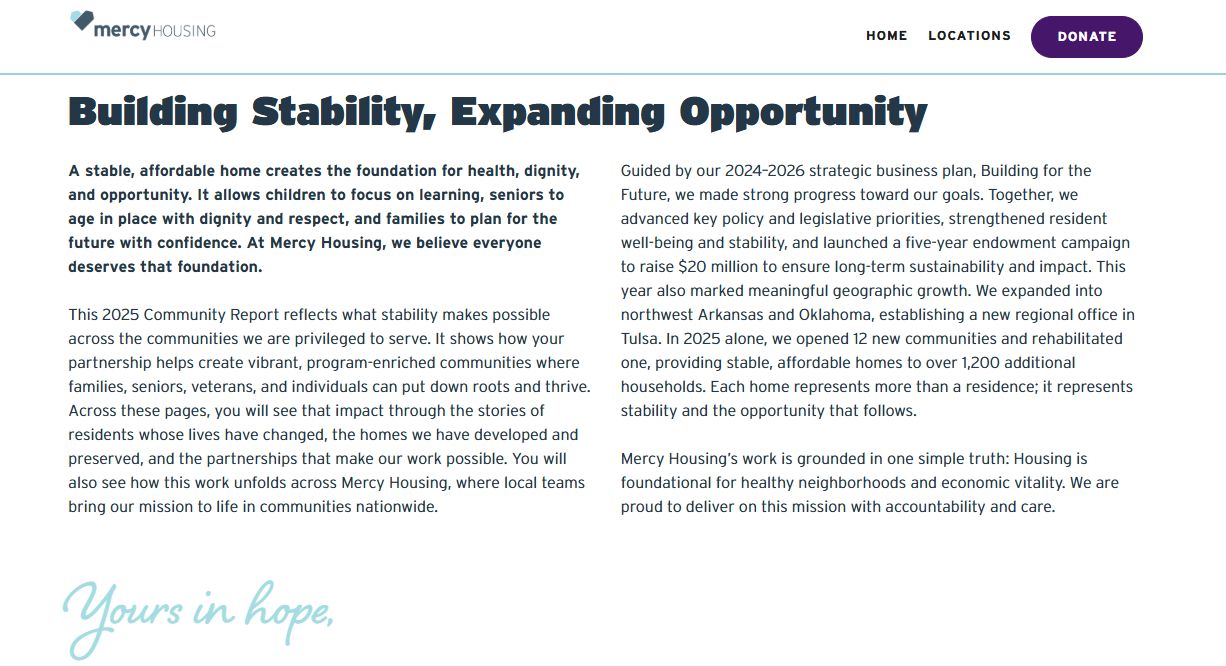
Mercy Housing’s Community Report interface showing strategic plan progress, March 2026
Mercy Housing, Observed March 2026
Interface: Community Report Microsite
Lens: Build Trust
Pattern: Strategic Accountability by Design
Key Signal
Mercy Housing replaced its traditional annual report and built an explicit public connection between its impact and its strategic plan.
Why It Matters
The community report doesn't just celebrate the year, it answers for the plan.
Observation
Mercy Housing used to publish a traditional annual report PDF, complete with donor listings, board rosters, financials, and organizational narrative. That format is gone. In its place: a community report microsite published annually, a strategic plan on its own dedicated microsite, audited financials as a separate download, and a 990 filed independently.
The community report opens with a two-column layout that does two things at once. The left side frames the mission: stable, affordable housing as the foundation for health, dignity, and opportunity. The right side immediately references the 2024-2026 strategic plan by name, reporting progress against it before the reader reaches a single story or stat. The strategic accountability is the second thing the reader sees.
The microsite format matters too. A PDF annual report is static, unsearchable, and requires a download. A microsite is navigable by section, linkable directly, and accessible to any reader without friction. A journalist can link to the strategic progress section. A prospective staff member can read a resident story without downloading anything.
The "Building for the Future" section of the community report is where the strategic connection lives. It tracks measurable progress across the four pillars of Mercy Housing's 2024-2026 strategic plan: homes completed, resident survey data, financial performance, staff culture initiatives. The strategic plan lives on its own separate microsite at future.mercyhousing.org. The community report closes the loop on it publicly, year by year.
The strategic clarity visible in this system may be the result of intentional design, or it may be partly accidental. Budget pressures, print production costs, and the practical ease of microsite publishing over designed PDFs could have driven the shift as much as communication philosophy. The intent is not visible from the outside. What is visible is the outcome, and it works.
Why It Matters
Over the last two decades, nonprofit transparency has shifted from making IRS Forms 990 available online to sharing richer stories of how missions show up in communities, a shift documented by the Johnson Center on Philanthropy and reinforced by the International Journal of Not-for-Profit Law, which identified disclosure and online transparency as key self-regulation tools for the sector. Recent research from NonProfit PRO suggests that while nearly four in five nonprofits use an annual or impact report to support fundraising, only around one in six believe these reports are truly effective, highlighting the gap between reporting as a task and reporting as a strategic storytelling tool. That gap is what makes Mercy Housing's approach worth examining.
Most organizations publish a strategic plan and report impact separately, with no explicit public thread connecting the two. Mercy Housing made them a connected system. The community report doesn't just celebrate the year. It answers for the plan.
That connection may be part of what closes the effectiveness gap. When a report is tethered to a public strategic plan, it builds trust by showing results, ties outcomes to a larger organizational vision, and pairs stories with data. Those are precisely the elements that research identifies as the difference between reports that work and reports that don't, legible to funders assessing credibility, partners deciding whether to invest, and communities watching whether promises hold.
The naming shift from "annual report" to "community report" is also noteworthy. It centers the people being served rather than the organization doing the reporting, and that orientation runs through the entire structure: stories alongside stats, residents before donors, outcomes alongside financials. Practice guides from Casebook and Social Impact Solutions identify this combination of quantitative outcomes and human-centered stories as the standard for demonstrating real-world change, and Mercy Housing's structure reflects that principle throughout. That reorientation is also what moves a report from task to tool.
Why This Works
Renaming the document "community report" is a structural signal. It tells every reader, before they read a word, who this report is for.
Opening with both mission framing and strategic plan progress signals from the first scroll that this report has two jobs: to ground the reader in why the work matters and to show whether the organization delivered on what it said it would do.
Publishing on a microsite rather than a PDF makes the content navigable by section, linkable directly, and accessible without a download, which matters for journalists, researchers, partners, and prospective staff who need specific information fast.
Connecting the community report explicitly to the active strategic plan is what makes it effective as a fundraising tool. It builds trust by showing results, ties outcomes to a larger vision, and pairs stories with data, which is exactly what the research identifies as the difference between reports that work and reports that don't.
Whether the shift to separate interfaces was a deliberate communications strategy or driven by budget and production constraints, the structure itself models what accountable, community-centered impact reporting can look like.
What I’m Watching
Whether nonprofits start treating the impact report as an accountability counterpart to a published strategic plan, rather than a standalone donor communication.