Turning Strategic Plans into Public Interfaces
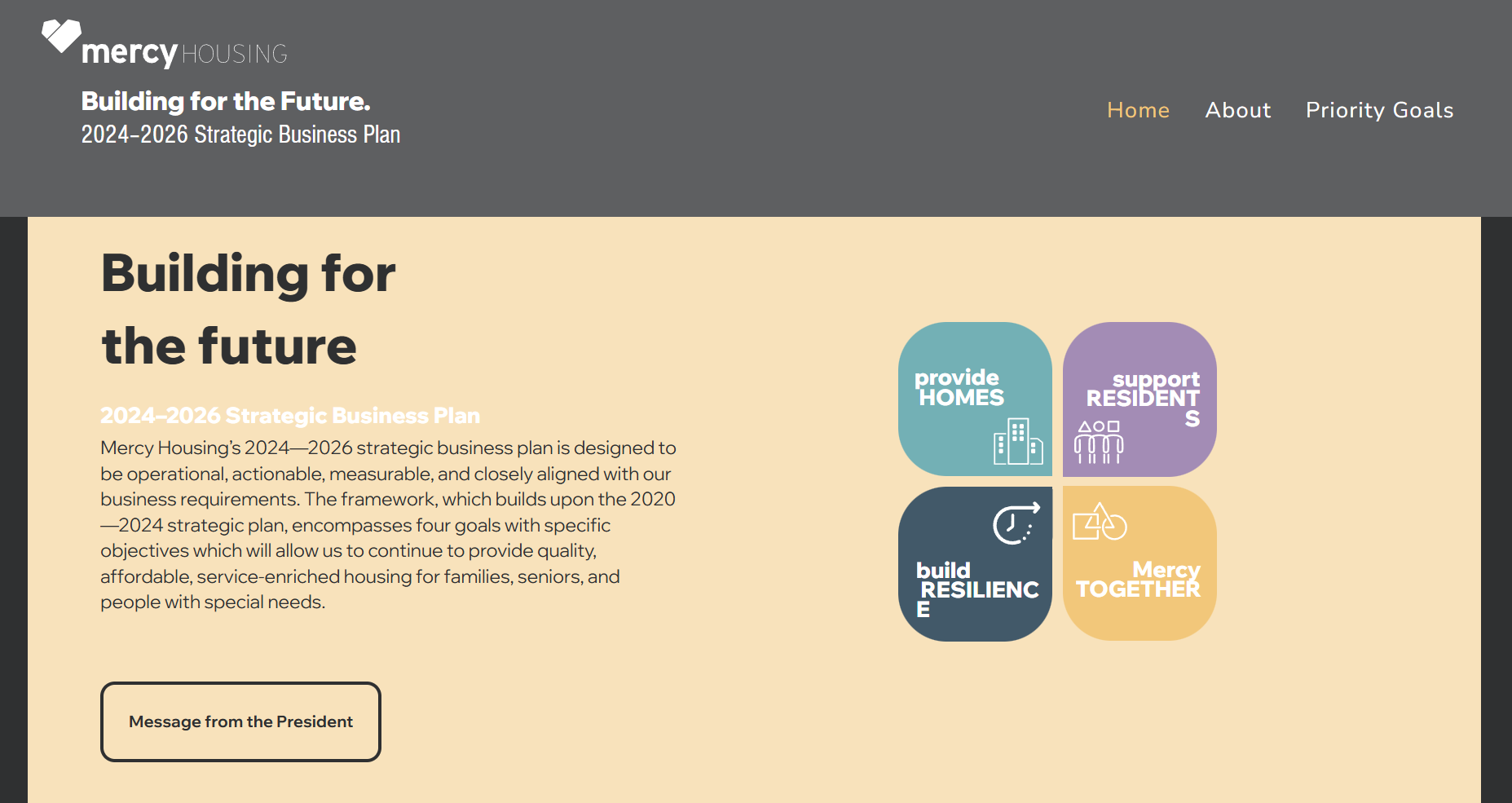
Mercy Housing Strategic Plan microsite showing “Building for the Future: 2024–2026 Strategic Business Plan,” March 2026
Mercy Housing, Observed March 2026
Interface: Strategic plan microsite
Lens: Build Trust
Pattern: Public-Facing Strategy Design
Key Signal
The organization presents its strategic plan as a dedicated, navigable microsite rather than a static internal document.
Why It Matters
This moves strategy from internal planning to public communication. By making priorities, goals, and commitments accessible in a structured digital format, the organization signals transparency and allows external audiences to see how current work connects to long-term direction.
Observation
Mercy Housing publishes its strategic plan through a dedicated website separate from its main organizational site. The interface presents long-term priorities, measurable goals, and operational commitments in a structured digital format accessible to the public.
Why It Matters
Strategic plans are often treated as internal planning documents or static PDFs shared primarily with boards and funders. By presenting the plan as a navigable web experience, Mercy Housing places its operational roadmap in the public sphere. This approach signals transparency and allows external audiences to see how current work connects to long-term organizational priorities.
Why This Works
Makes strategy accessible beyond internal stakeholders
Signals transparency through visibility of plans and priorities
Connects day-to-day work to long-term direction
Uses interface structure to clarify complex information
Positions strategy as something to be shared, not just executed
What I’m Watching
Whether more nonprofit organizations publish strategic plans as public digital interfaces rather than internal planning documents.