Pairing Strategy with Visible Progress
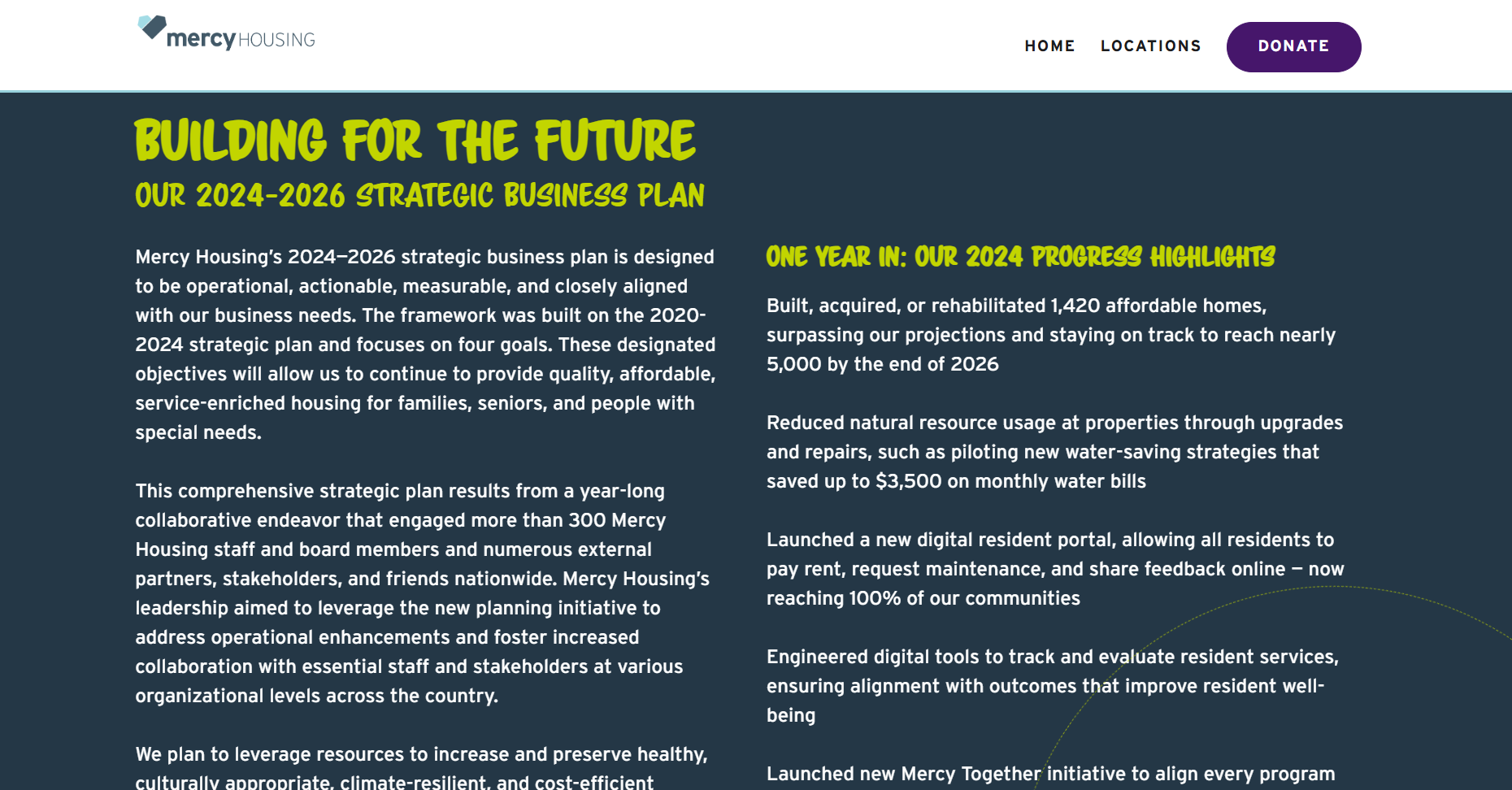
Mercy Housing strategic plan interface showing progress highlights including homes built and program outcomes, March 2026
Mercy Housing, Observed March 2026
Interface: Strategic plan
Lens: Build Trust
Pattern: Progress-as-Communication
Key Signal
The strategic plan interface includes visible progress metrics, showing outcomes alongside stated goals within the same experience.
Why It Matters
This connects intention with evidence. Instead of presenting strategy as a static plan, the interface shows how work is progressing over time, reinforcing accountability and credibility.
Observation
Alongside its published strategic plan, Mercy Housing shares measurable progress indicators such as homes built, environmental improvements, and resident service outcomes. These updates appear within the same public interface as the strategy itself.
Why It Matters
Many organizations publish strategic plans but rarely report progress against them publicly. By pairing strategy with visible progress metrics, Mercy Housing creates a feedback loop between planning and accountability. Visitors can see not only what the organization intends to do, but also how results are unfolding over time.
Why This Works
Links long-term strategy to measurable outcomes
Makes progress visible without requiring separate reporting
Reinforces accountability through transparency
Allows visitors to assess performance over time
Turns planning into an active, evolving narrative
What I’m Watching
Whether nonprofit organizations begin integrating progress reporting directly into strategic plan interfaces as a way to demonstrate accountability and credibility.