Habitat Turned a Mission Symbol into a Participatory Experience
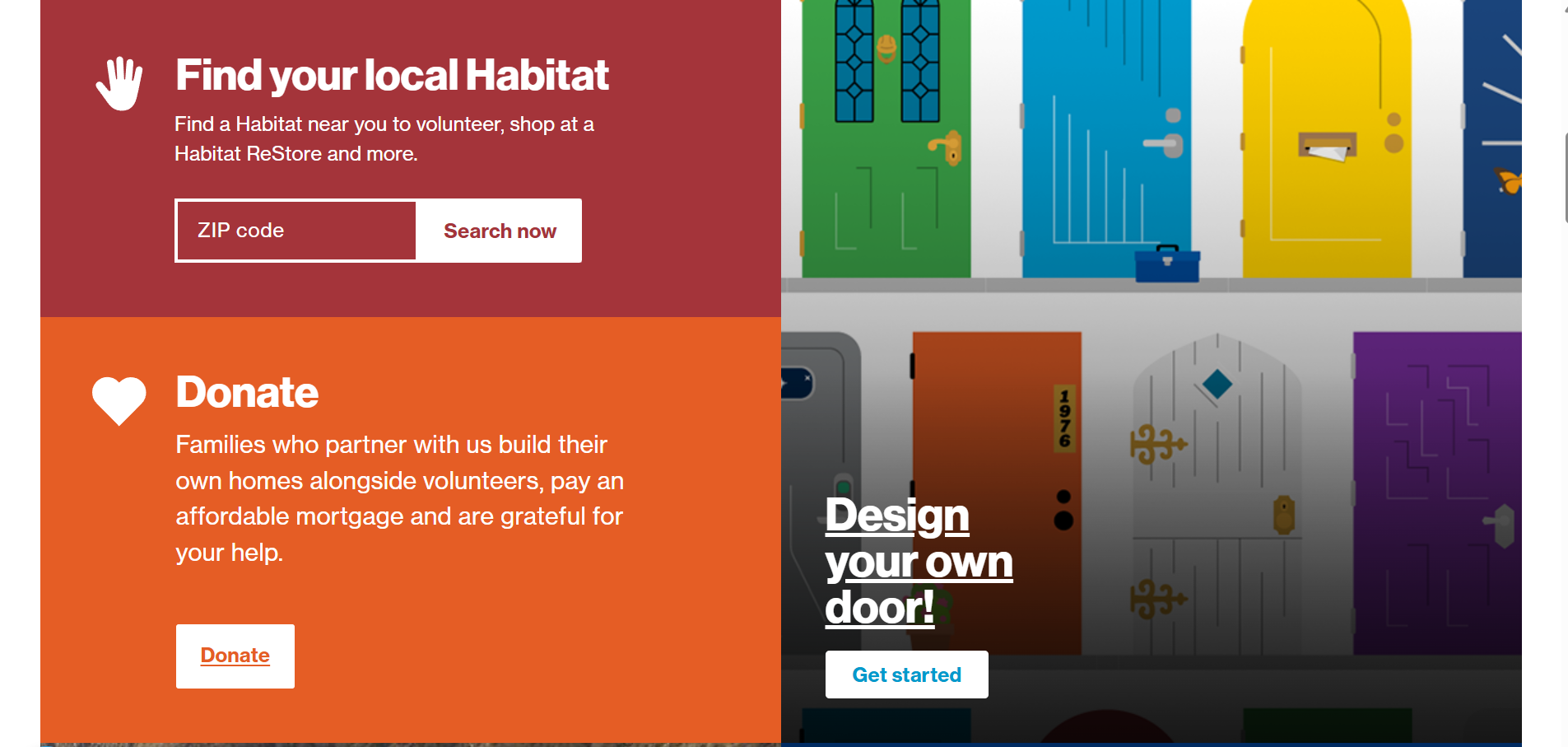


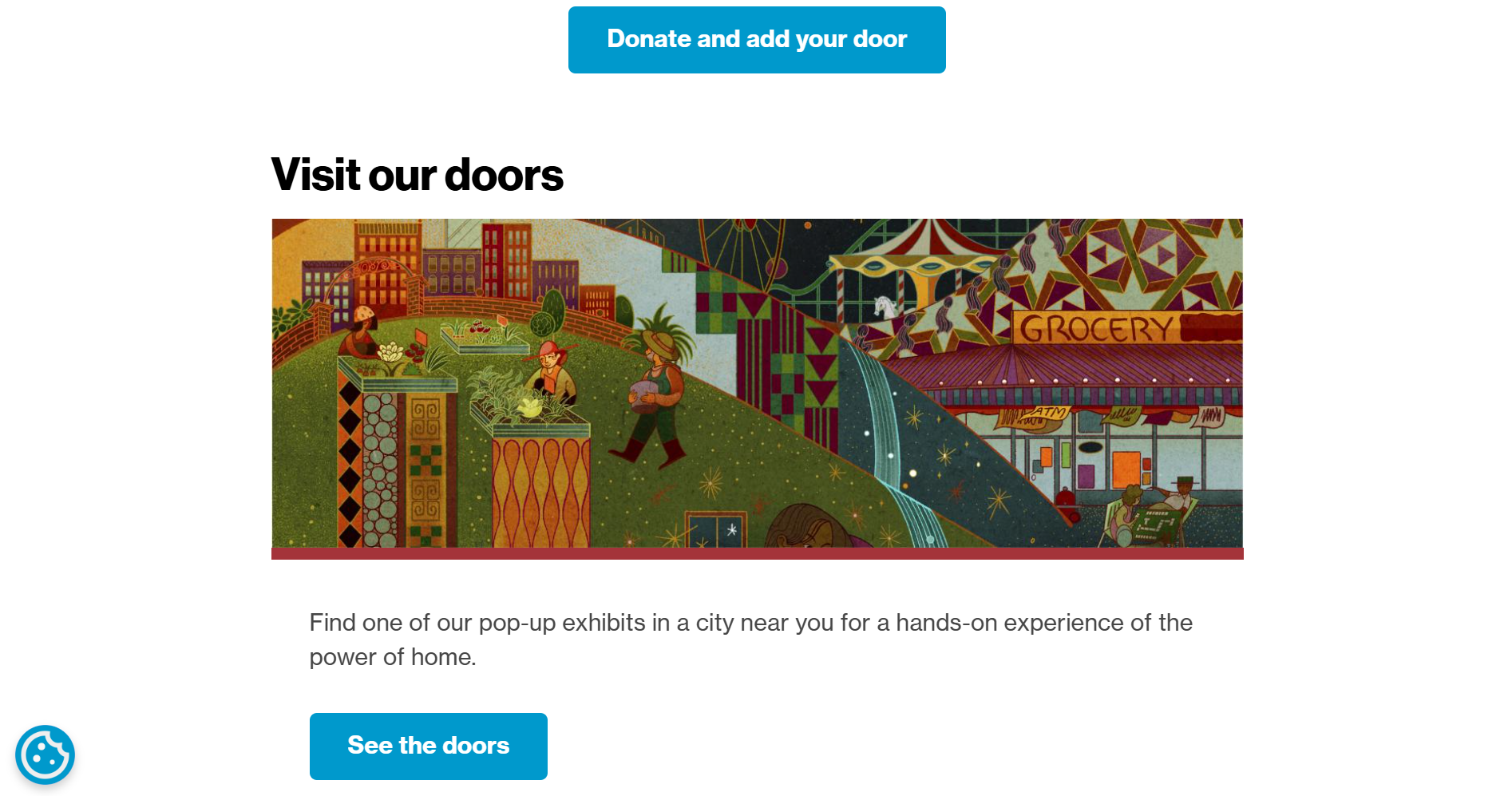


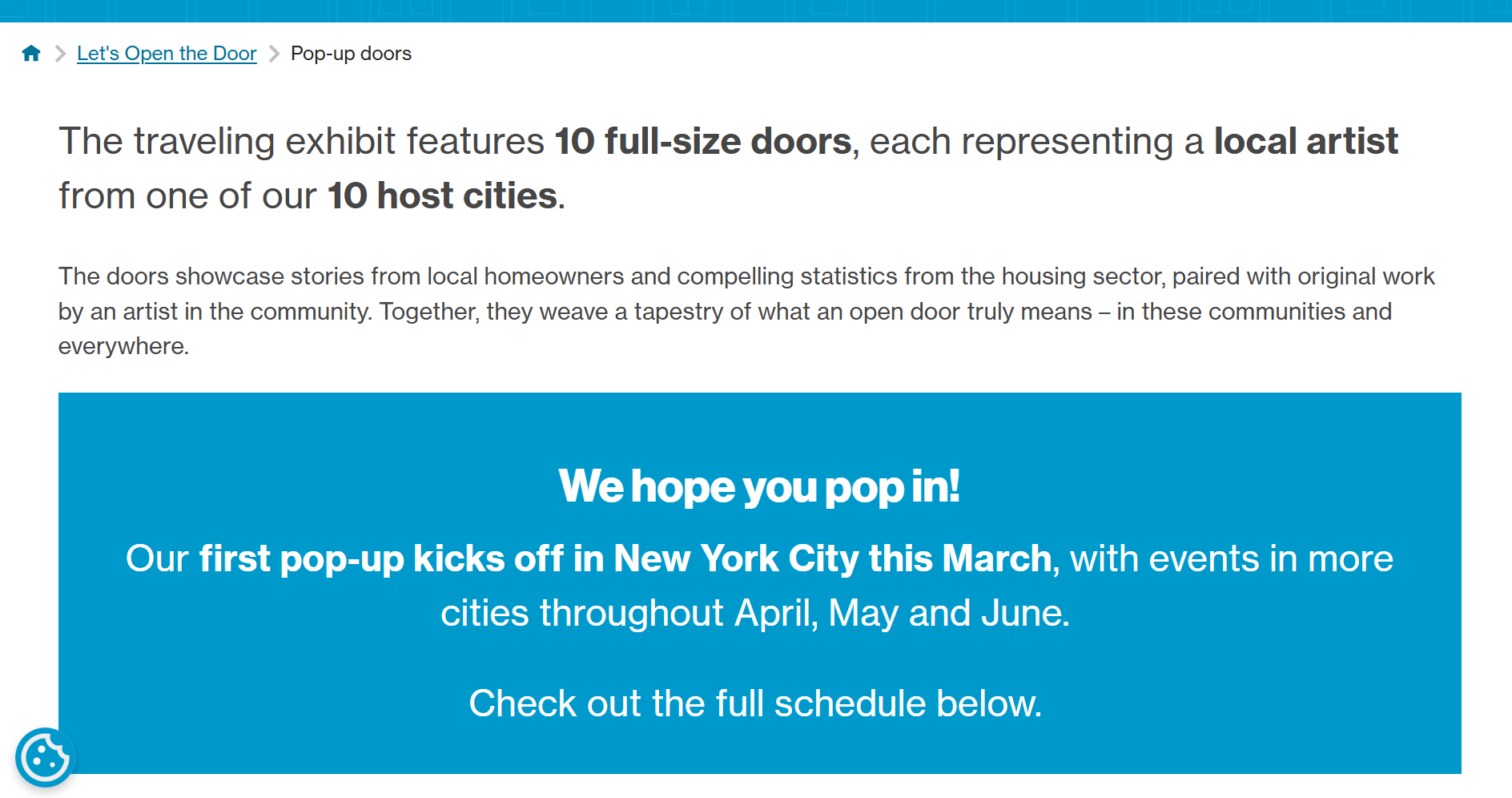


Habitat for Humanity’s website page for their Design Your Door promotion and traveling exhibit, April 2026
Habitat for Humanity, Observed April 2026
Interface: Website pages - Design Your Door Promo and Traveling Exhibit
Lens: Invite Participation
Pattern: Mission-Centered Symbols
Key Signal
Habitat built an entire campaign around a single object that already carries meaning within its mission. Supporters could interact with the symbol instead of simply learning about it.
Why It Matters
People often understand a mission more easily when they can experience it, create something connected to it, or see themselves reflected in it.
Observation
Habitat for Humanity's "Let's Open the Door" campaign centers participation around a familiar symbol: the front door.
Supporters can donate and design a digital door, personalize it, and share it with others. They can browse a gallery of doors created by other participants. In cities across the country, visitors can also attend pop-up exhibits featuring artist-designed doors alongside homeowner stories and local housing data.
The campaign moves between digital and physical spaces while staying connected to the same idea. Throughout the experience, language such as "open the door," "unlock," and "design your door" reinforces the connection between the object and the mission.
Rather than asking supporters to simply observe the issue, the campaign invites them to interact with a symbol that represents safety, stability, and access to housing.
Why It Matters
Many nonprofit campaigns rely on storytelling to help people understand an issue. Habitat created an experience that allows people to engage with an object closely tied to its mission.
The door becomes more than a design element. It creates a way for people to participate, express themselves, learn about housing challenges, and encounter stories from homeowners. Someone can donate, create, attend an exhibit, explore, or share, offering multiple ways to engage with the campaign. The result is a campaign where fundraising, storytelling, and community participation reinforce one another through a shared symbol.
Why This Works
Uses a symbol that people immediately recognize and understand.
Gives supporters a creative role within the campaign.
Provides multiple ways to participate.
Connects digital and in-person experiences.
Reinforces the same message through language, design, and storytelling.
Makes the mission feel tangible rather than abstract.
What I’m Watching
I'm watching whether more nonprofits build campaigns around objects, symbols, or experiences that already sit at the center of their mission.
Doors may be uniquely suited to Habitat, but other organizations have symbols that carry similar meaning. Food banks have grocery bags and tables. Literacy organizations have books. Environmental groups have trails, trees, and waterways.
The question is whether those symbols can move beyond branding and become experiences that help supporters participate, understand, and connect with the work.