When “100% to Programs” Becomes the Value Proposition
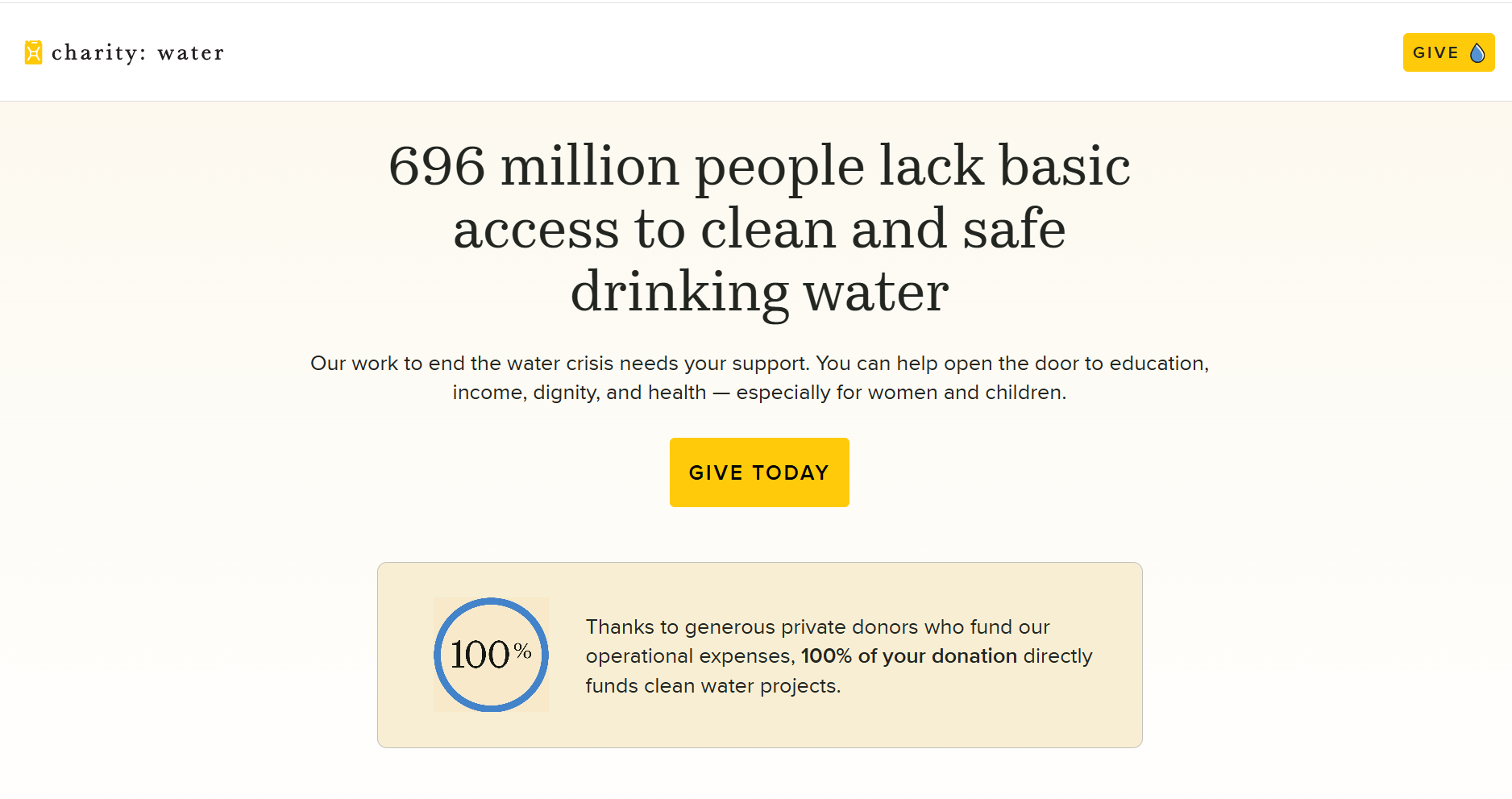
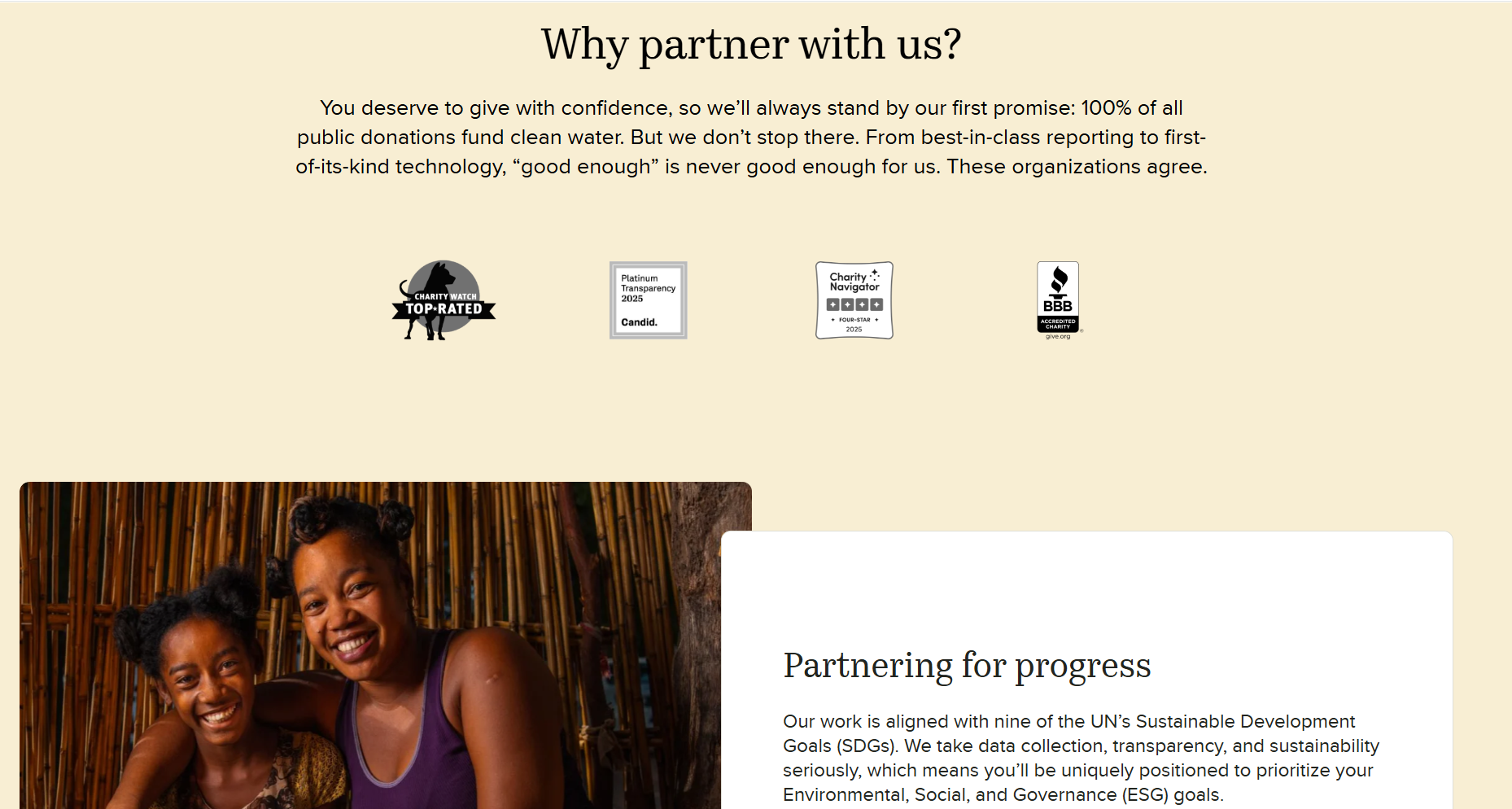
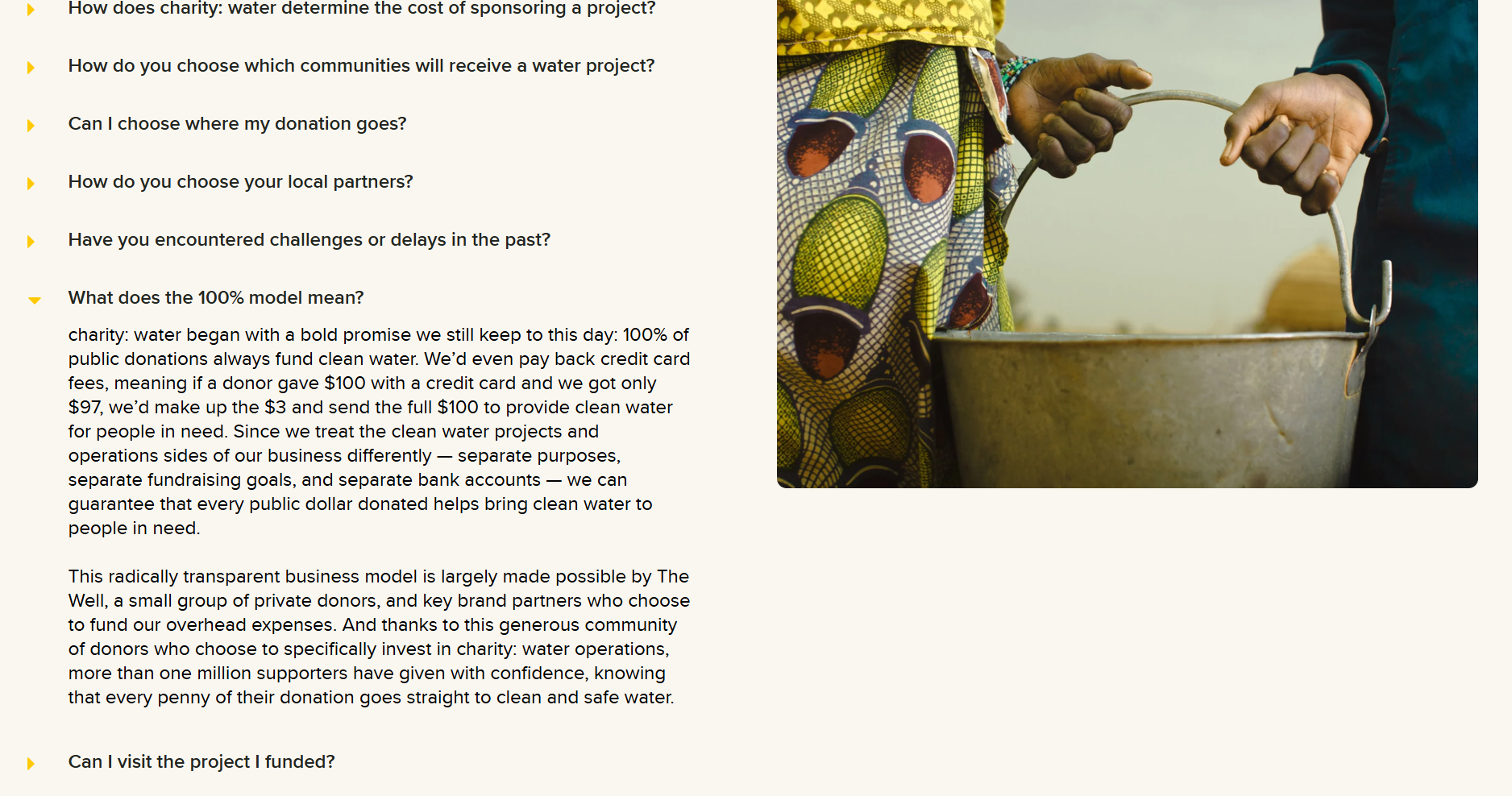
charity: water homepage donation section, FAQ, and partner with us pages showing 100% donation, April 2026
charity: water, Observed April 2026
Interface: Homepage Donation Section, FAQ, Partner With Us Page
Lens: Build Trust
Pattern: Funding Guarantee Framing
Key Signal
A clear “100% of donations fund water projects” claim appears prominently across the site.
Why It Matters
This model addresses one of the most persistent tensions in nonprofit fundraising. Donors want their dollars to go directly to programs, while organizations require consistent funding for operations to deliver that work effectively.
Observation
charity: water consistently communicates that 100% of public donations fund clean water projects. This messaging is supported by a separate funding structure in which operational costs are covered by a distinct donor group, The Well. The site consistently reinforces this model across the homepage, FAQs, and supporting pages, making the funding structure a visible and central part of the user experience rather than a background detail.
Why It Matters
For many organizations, overhead is something that often has to be explained or defended. Here, it is structurally separated. By doing this, that tension is likely minimized. The experience shifts from evaluating how funds are allocated to simply deciding whether to participate.
At the same time, the consistency of the message across the site makes it clear this is not just an operational detail. It’s a deliberate part of how the organization communicates trust and impact. This raises an important consideration for nonprofit communicators. If donors are consistently looking for direct impact, how might funding models, or the way they are communicated, evolve to meet that expectation while still sustaining the work behind the scenes?
Why This Works
Removes a core donor hesitation by clearly answering where money goes at the moment of decision
Turns a structural challenge into a value proposition by making the funding model part of the story
Uses repetition across pages to reinforce credibility and reduce ambiguity
Pairs a simple headline claim with deeper operational detail for those who want to understand more
Creates distinct donor roles, separating program funding from operational support
Aligns naming with mission language through “The Well,” reinforcing meaning and memorability
What I’m Watching
How often organizations move beyond explaining overhead toward restructuring or reframing how it’s funded.
Whether more nonprofits create distinct donor pathways for operations versus programs, rather than blending both into a single narrative.
And how frequently cost allocation becomes a visible, repeated part of the user experience, not just delineated in a financial report.