Opening the Door: Turning a Mission Into a Participatory Experience
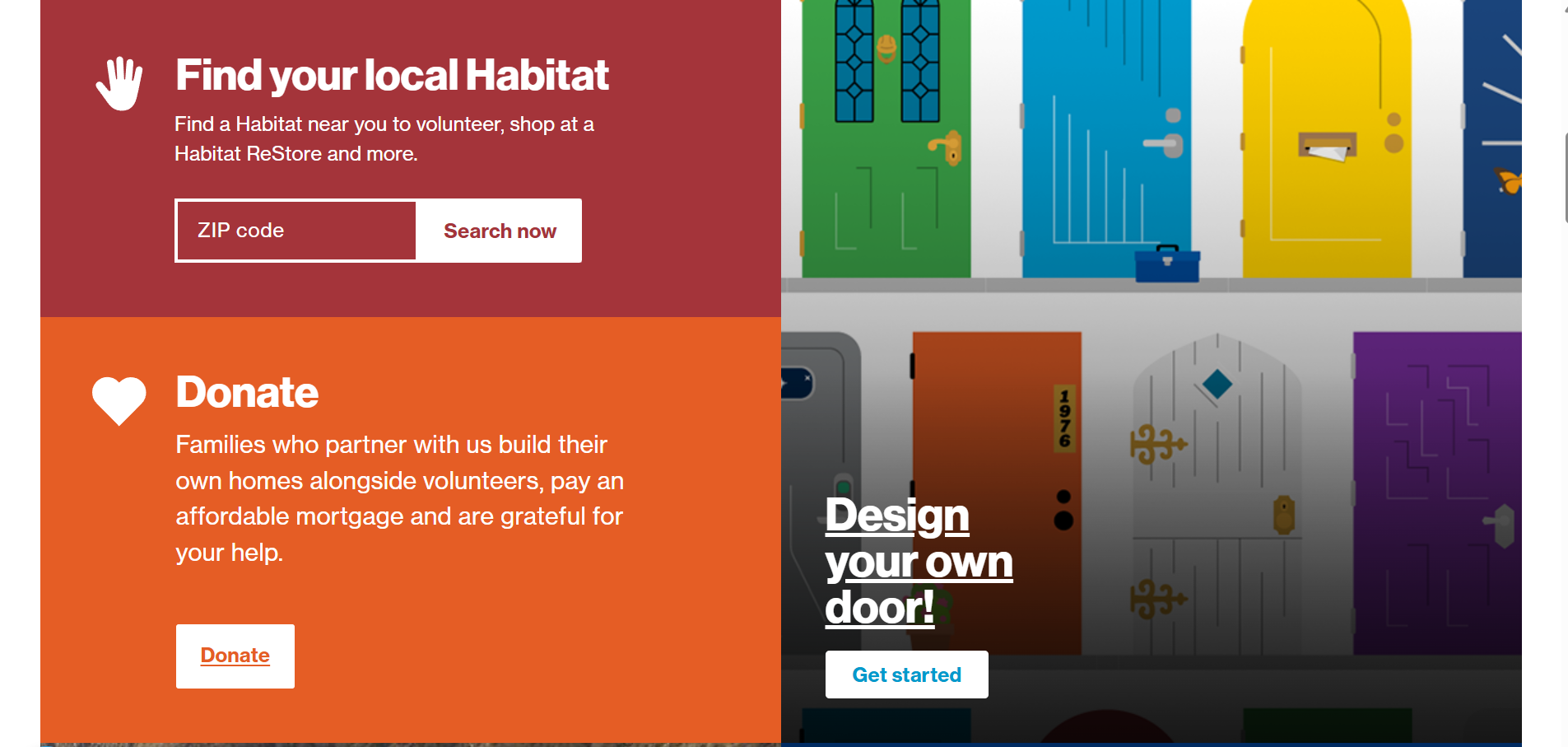


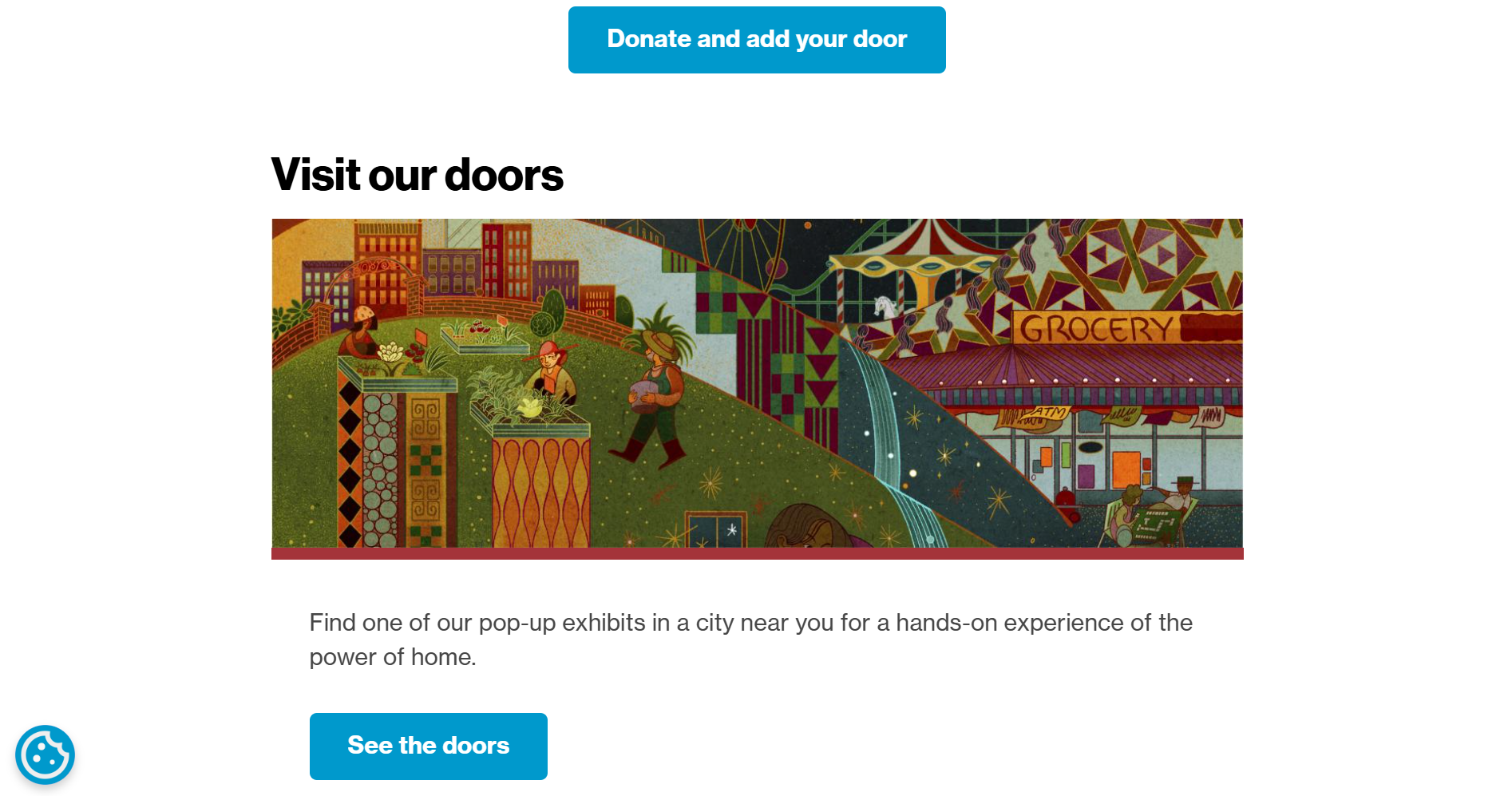


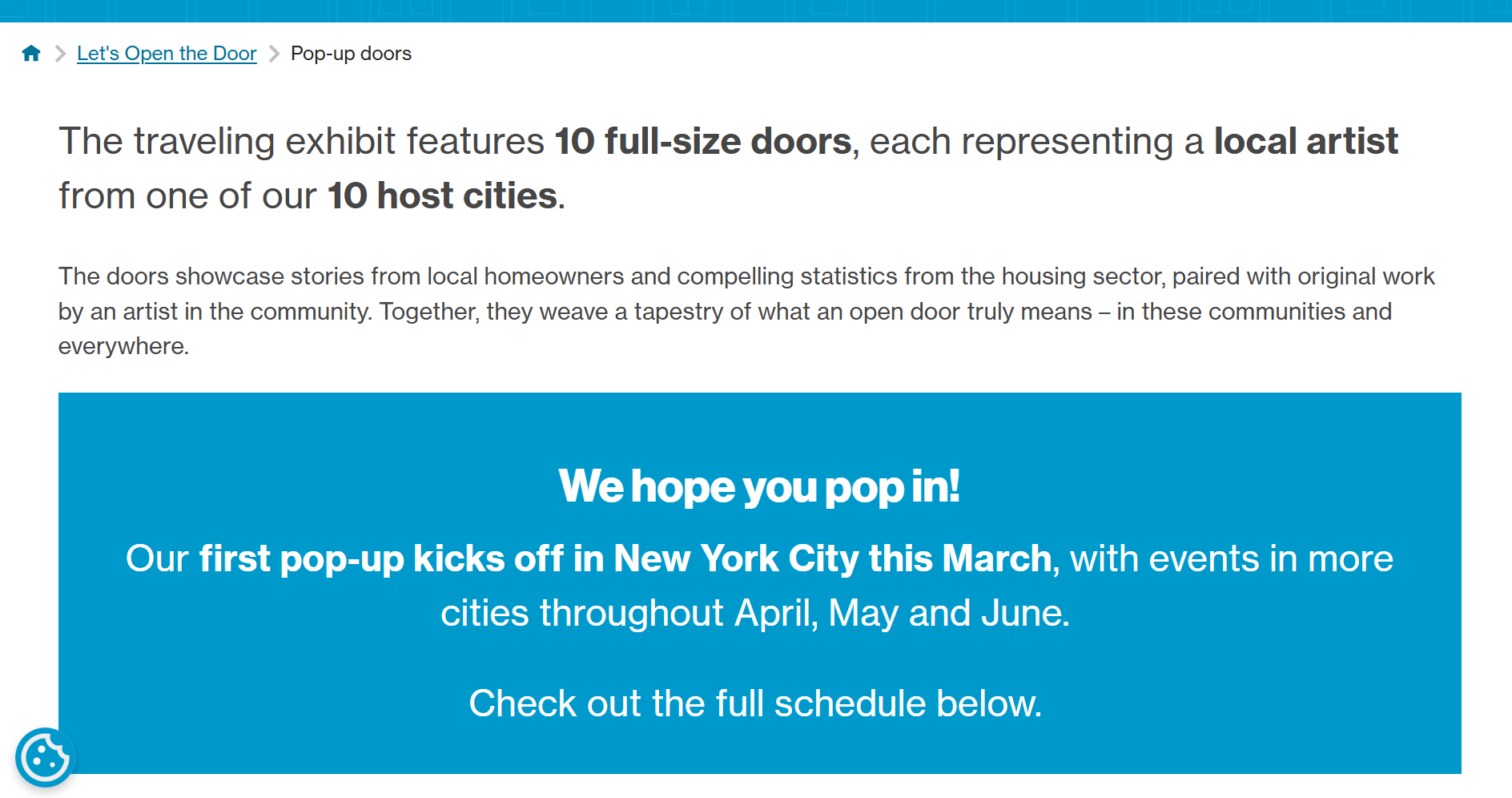


Habitat for Humanity’s website page for their Design Your Door promotion and traveling exhibit, April 2026
Habitat for Humanity, Observed April 2026
Interface: Website pages - Design Your Door Promo and Traveling Exhibit
Lens: Invite Participation
Pattern: Mission-Embedded Participation
Key Signal
Participation is structured around a central symbol. The door becomes the interface for giving, storytelling, and sharing, allowing people to engage with the mission through creation, not just observation.
Why It Matters
Most campaigns ask you to support the mission. This one puts the mission in your hands.
Observation
Habitat for Humanity's "Let's Open the Door" experience centers participation around a single, mission-aligned symbol: the door.
Visitors can donate and design a door tied to safe, affordable housing. Personalize it. Share it socially. Explore a gallery of doors created by other supporters. And in cities across the country, attend pop-up exhibits where full-size artist-designed doors are paired with homeowner stories and local housing data.
The campaign moves across digital and physical spaces without losing coherence. Language throughout, "open the door," "unlock," "design your door," keeps every touchpoint connected to the same idea. The symbol does consistent work across every surface.
Why It Matters
Most nonprofit campaigns separate participation from the mission. You give money, time, or attention and the org does the work. The action and the mission are two different things.
This campaign collapses that distance. The act of designing a door isn't just support for the mission. It's the mission made tangible. People aren't funding housing access from the outside. They're touching what it means to have a home.
That shift changes who the campaign is for. Participation isn't singular or transactional. You can donate, design, explore, visit, or share. Entry points multiply. People who would never give money can still belong to the experience and through that belonging, develop a relationship with the work.
The result is a campaign that functions less like a message and more like an environment. Fundraising, storytelling, and community engagement aren't separate components. They're part of the same system, held together by one symbol.
Why This Works
Uses a clear, universal symbol tied directly to the mission
Makes participation creative, not just transactional
Connects emotional meaning (home, access) to user action
Provides multiple entry points across digital and physical spaces
Reinforces the concept consistently through language and design
Extends engagement through sharing and community visibility
Bridges individual expression with collective impact
What I’m Watching
Whether more nonprofits design campaigns where participation is built around a symbol or object that lives at the center of the mission, and how often those experiences extend meaningfully across digital, social, and physical spaces without losing the thread.