What Makes People Follow a Campaign From Start to Finish?
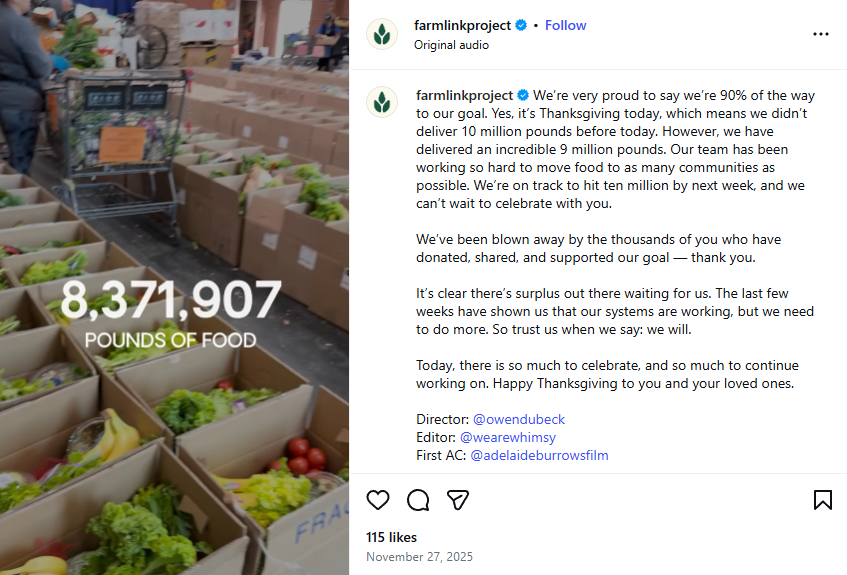
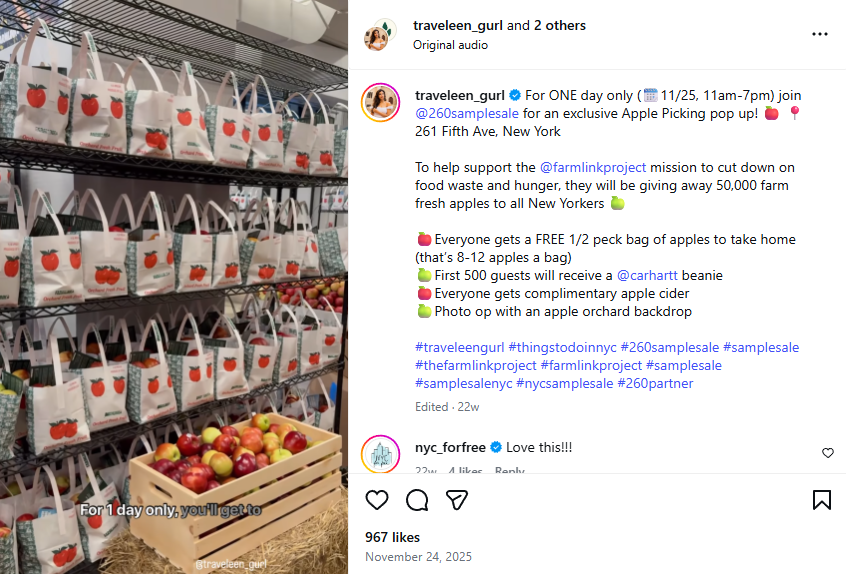
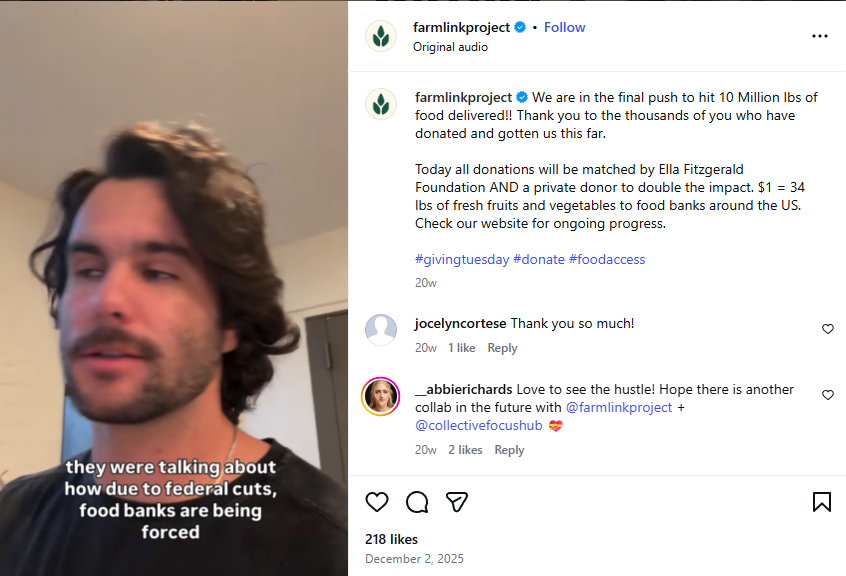
The Farmlink Project, campaign progress posts, Instagram, October – December 2025
The Farmlink Project, observed across Instagram, October to December 2025
Interface: Instagram | @farmlinkproject
Lens: Invite Participation
Pattern: Serialized Campaign Structure
Key Signal
Every post gave people something new to come back for.
Why It Matters
When each post taps into a different component of the campaign instead of repeating the same message, people are pulled to come back.
Observation
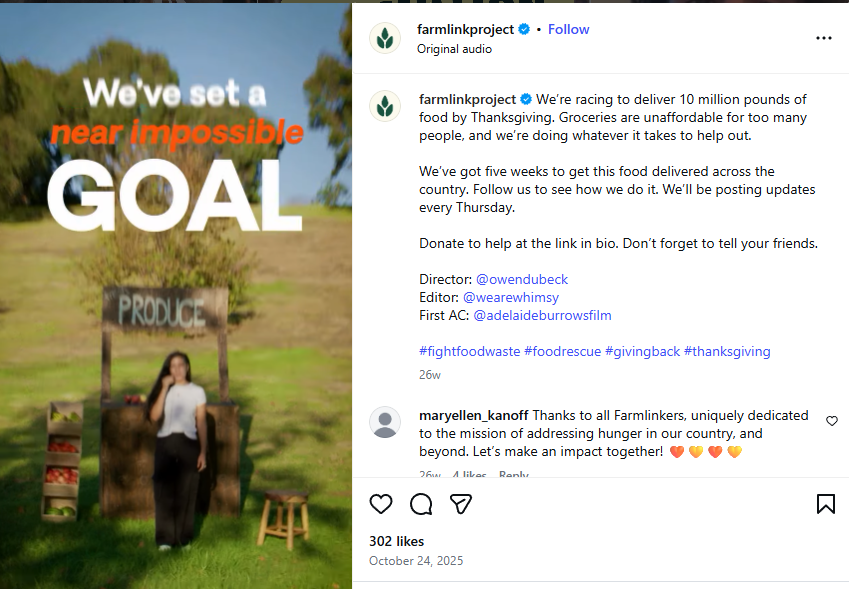
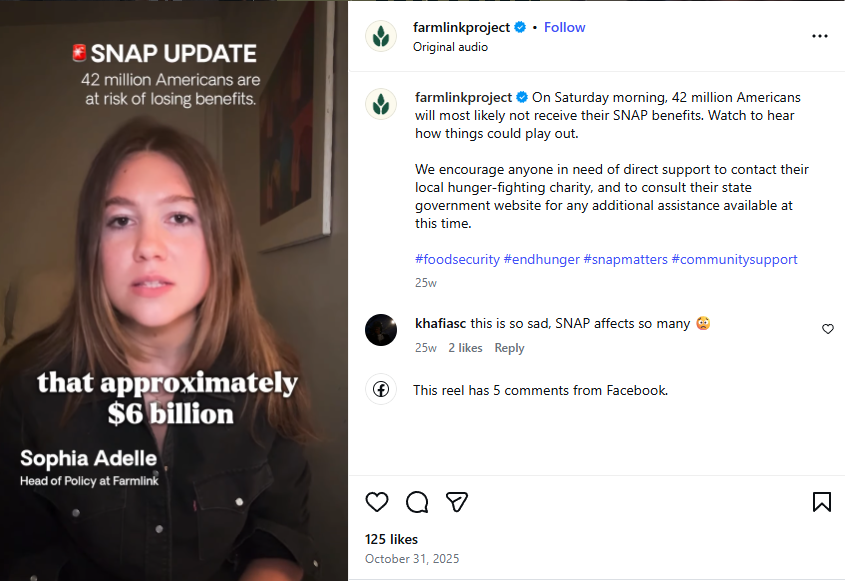
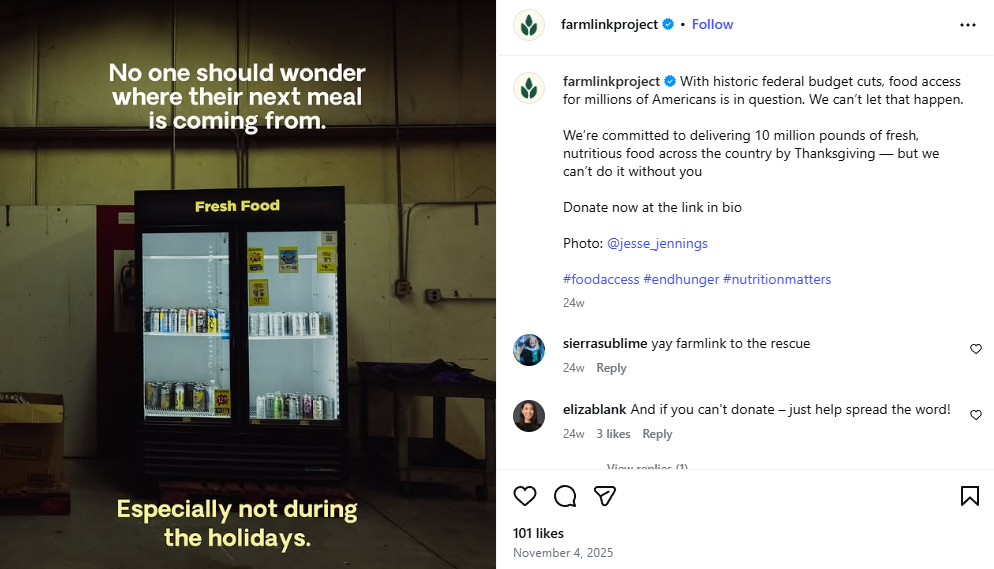
In late October 2025, The Farmlink Project announced a goal to deliver 10 million pounds of food by Thanksgiving. What stood out was not just the size of the goal, but how the organization communicated its progress along the way.
Many campaigns launch with a message and then repeat it for weeks. The wording may change, the graphic may change, or a new story may be added, but the audience is often seeing the same basic ask again and again. Farmlink took a different approach. Instead of repeating the same message, each post added a new piece of the story.
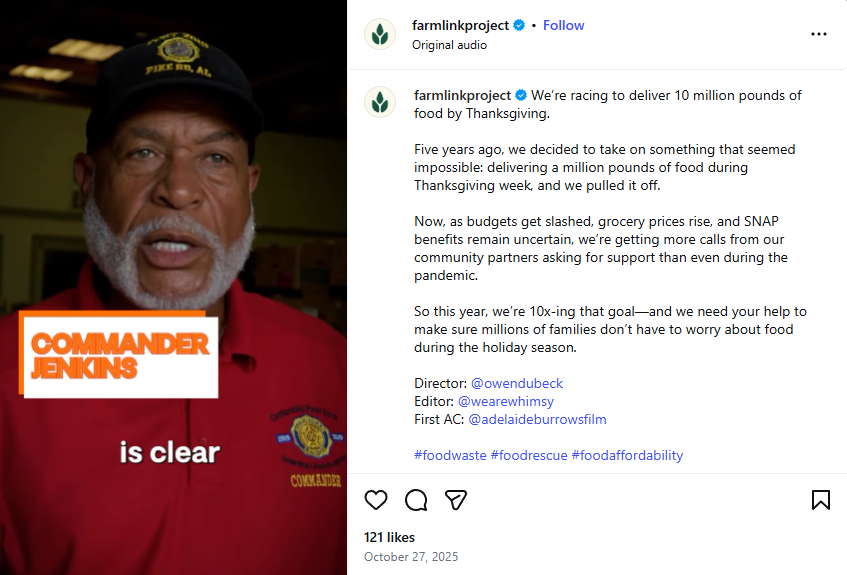
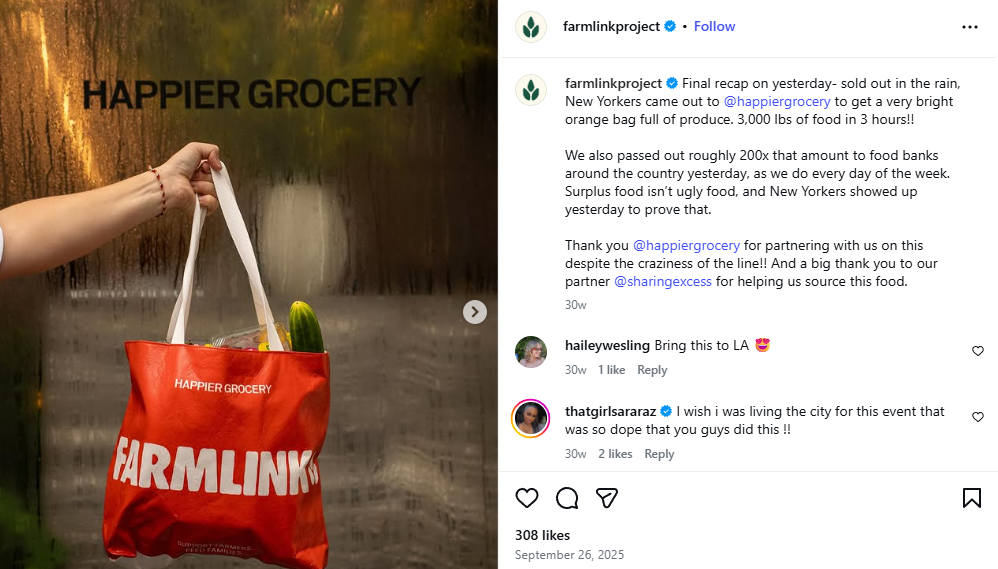
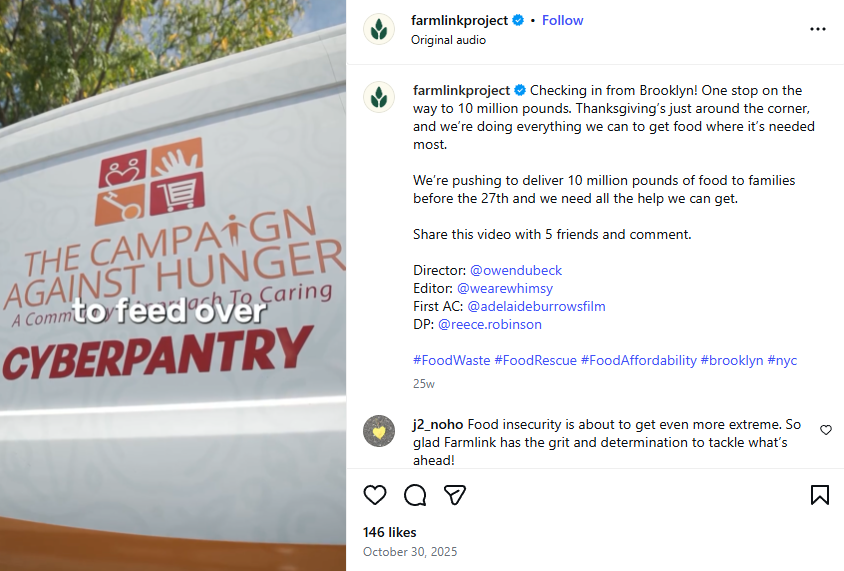
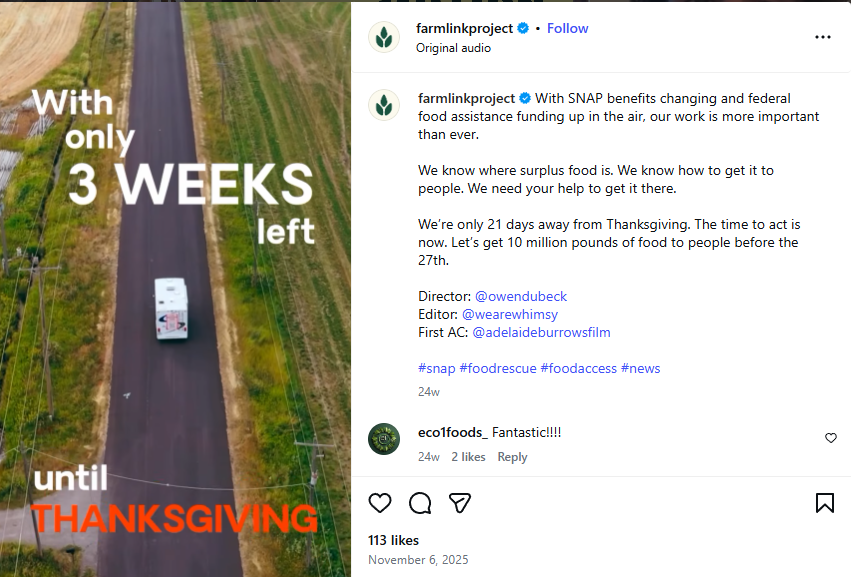
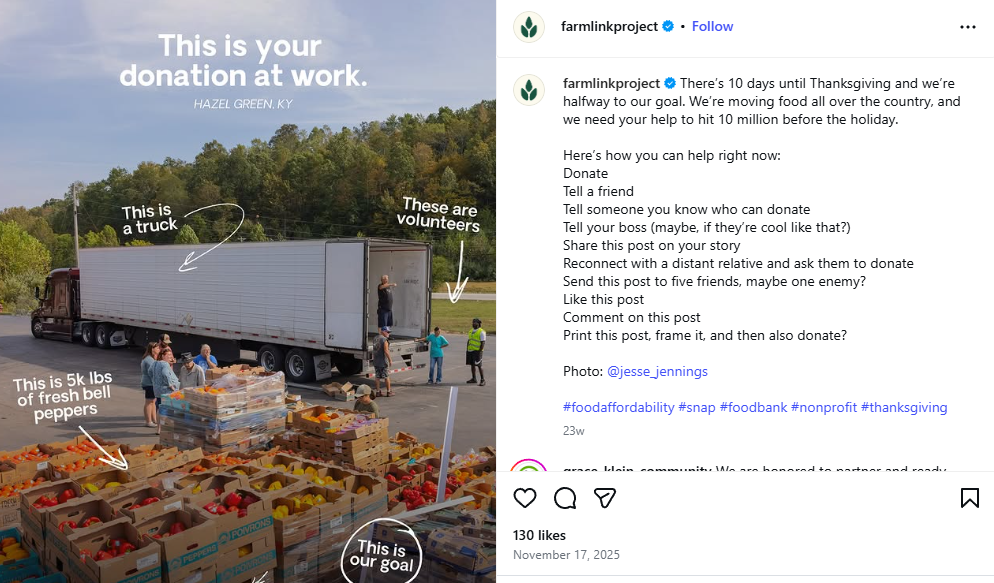
One post introduced the goal. Another gave more context about food insecurity. Progress updates showed how close the organization was getting. Behind-the-scenes content showed the work in action. Partnerships brought new people into the campaign. As Thanksgiving approached, the message shifted into a final push.
The audience was not seeing the same message repeated. They were watching a story move forward. By the time the goal was reached, supporters had seen the challenge, followed the progress, and experienced the outcome.
Why It Matters
Most nonprofit campaigns tend to follow one of two patterns. Some rely on repetition. A campaign launches with a clear message and goal, followed by multiple reminders that reinforce the same framing. The language stays consistent, the visuals may shift slightly, but the core message does not evolve.
Others introduce variation, but without connection. A campaign might include an impact story, a statistic, a volunteer highlight, and a reminder to give. Each piece is meaningful on its own, but they are not structured to build on one another. The content rotates, but it does not progress.
In both cases, the experience is similar. Each post asks for attention independently. There is no clear sense of movement from one moment to the next, and no reason to return beyond seeing another version of the same message.
The Farmlink Project takes a different approach. Their campaigns are not built on repetition or rotation. They are built on progression. Each post changes the state of the campaign. New context is introduced, progress is made visible, and the audience is given a sense that something is actively unfolding.
The difference is not just in what is said, but in whether the audience experiences change from one post to the next.
Why This Works
Each post gives supporters a new reason to pay attention. The campaign does not rely on the same reminder over and over.
Progress is visible. People can see how close Farmlink is getting to the goal, which makes the campaign feel active.
The campaign has a clear beginning, middle, and end. Supporters are not just seeing posts. They are following a story.
Partnerships and events bring in new people and new settings, which keeps the campaign from feeling repetitive.
The fixed Thanksgiving deadline creates natural urgency. The closer the date gets, the more meaningful each update becomes.
Showing the work as it happens builds trust. People can see the effort behind the outcome.
What I’m Watching
Whether more organizations begin to move away from repeated or disconnected campaign content and toward sequences that evolve over time, and what level of planning and coordination that requires for teams managing multiple programs and priorities.
Whether campaigns built around progression can stay responsive when real-world events shift the context mid-campaign, rather than just executing what was planned.
And whether this structure can hold beyond well-defined moments with a single clear goal, and how it translates to other channels where campaigns are still often delivered as a series of repeated messages rather than a progression.