Separating Participation into a Dedicated Platform
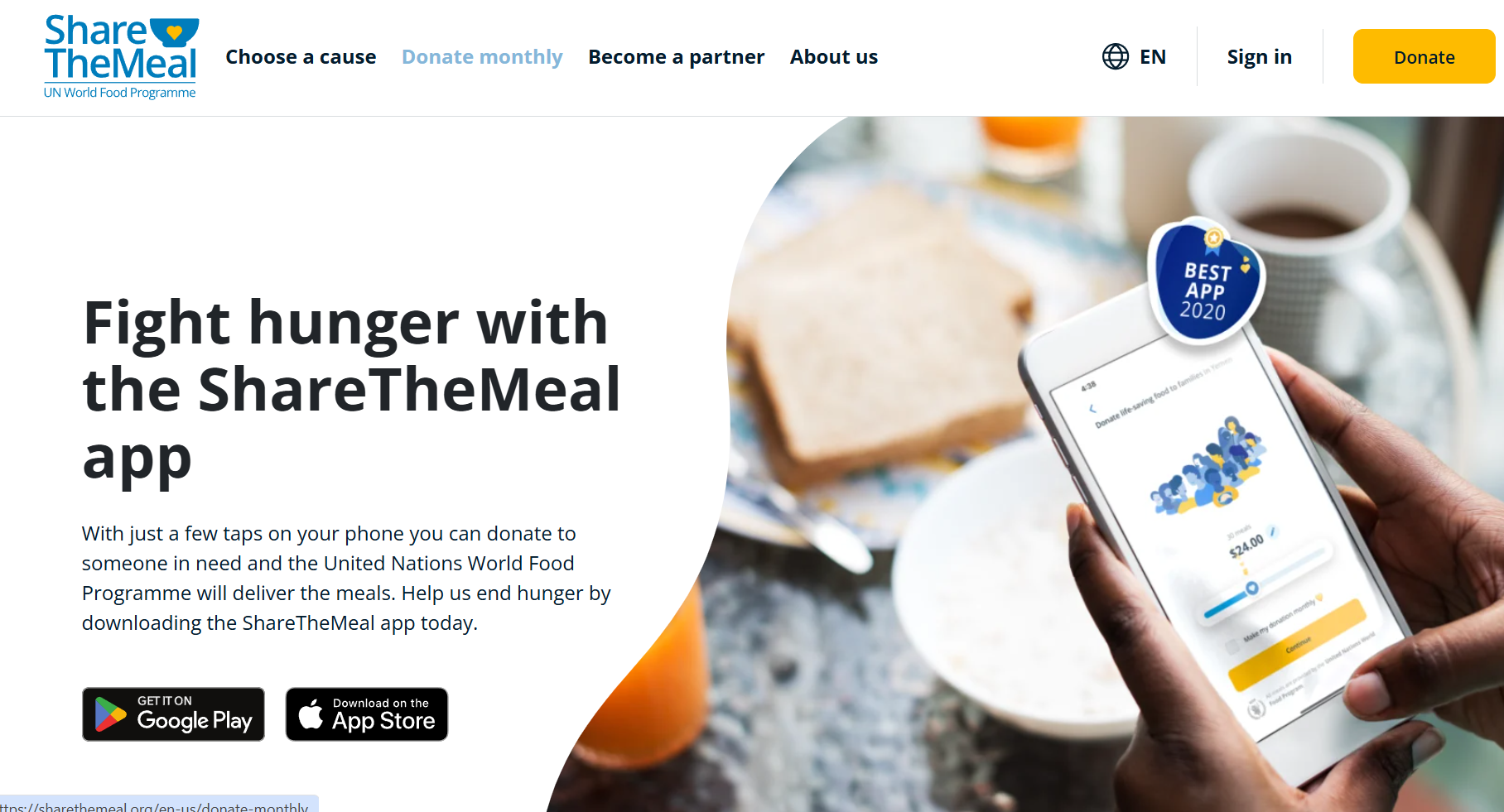
ShareTheMeal Homepage App Promotion Interface showing app download prompt in the first screen view, March 2026
ShareTheMeal / World Food Programme, March 2026
Interface: Digital fundraising platform
Lens: Invite Participation
Pattern: Dedicated Participation Environment
Pattern: App-Based Giving
Issue Area: Hunger
Key Signal
Participation is moved out of the main website and into a separate, purpose-built product. The app becomes the primary environment for giving and ongoing engagement.
Why It Matters
Participation is separated from explanation, creating a distinct environment designed specifically for ongoing engagement.
Observation
The ShareTheMeal website (a product of World Food Programme) centers entirely on promoting the ShareTheMeal mobile app, encouraging visitors to download it as the primary way to participate.
At the same time, the World Food Programme’s main website operates as a more traditional institutional site focused on explaining the organization’s work, programs, and global response efforts.
The app and the institutional website function as two separate digital environments.
Why It Matters
Many nonprofit organizations place fundraising, storytelling, and institutional information within the same website.
In this case, participation is largely separated into a dedicated digital product. The app becomes the primary environment for donating, tracking campaigns, and engaging with the work over time, while the main website maintains a more traditional institutional role.
Why This Works
Separates institutional content from participation
Reduces friction by narrowing the purpose of the experience
Creates a dedicated space for action and repeat engagement
Supports ongoing interaction beyond a single visit
Aligns the interface with long-term user behavior
What I’m Watching
Whether more organizations experiment with separating participation platforms from institutional websites, particularly through apps or dedicated campaign environments.